
Genesis 1:1–2:3
The Beginning of Nature
What one believes about the origin of nature or of human society inevitably influences one's day to day decisions about how one should live. Throughout recorded history, the world's cultures attest belief in some higher being, perhaps many, whose intelligence and actions ordered nature. Nature's god, if you will.
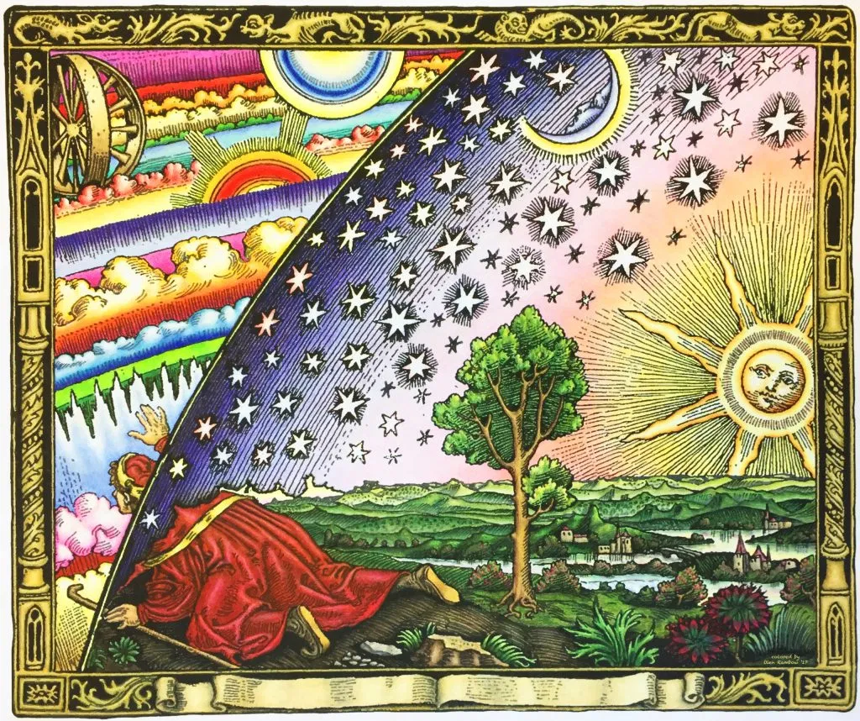
Image Caption: A traveller puts his head under the edge of the firmament in a colored version of the 1888 wood engraving of Flammarion. Source: Flammarion engraving (Wikipedia) [https://en.wikipedia.org/wiki/Flammarion_engraving]; color version: [https://i1.wp.com/empyreangemstones.com/wp-content/uploads/2019/02/Flammarion_Colored-scaled.jpg?fit=1024%2C858&ssl=1]
As mortal beings who are part of nature, we ponder the purpose of life and whether life may continue after physical death. All who value life long to live on.
As moral beings who sense the beauty of moral truth yet regret a path of wrongdoing, we acknowledge accountability for our actions and motives and hope we may learn more rightly to relate to others and the world around us. All who value honor yearn to be made whole.
Inferring that a consitently moral world requires an afterlife where moral character is rewarded but moral rebellion punished, we hope for yet also fear an uncompromising eternal judgment.
Conveying the rewards and perils of the paths we choose in life's journey is the message of the Bible, and no less the message of the book of Genesis. The path is frought with deception and danger; tread wisely.
Ancient Creation Accounts
As background for the Genesis account of creation, it is wise to consider the cultural milieu from which Genesis was formed. Ancient Mesopotamian archaeology witnesses several accounts of the origin of the world:
- The Eridu Genesis is a Sumerian account that describes the creation of the world, the founding of the first cities (such as Eridu and Babylon), and a great flood.
- The Atrahasis Sumerian epic focuses on creation and early human history. Because human populations multiplied and made too much noise, the gods attempted to decrease their numbers through plagues, drought, and a catastrophic flood. Atrahasis, 'Exceeding Wise', saved humanity from the flood.
- The Enûma Eliš is the Babylonian Epic of Creation. Discovered in Ashurbanipal's library at Nineveh, this seven-tablet epic describes the emergence of gods from a confluence of fresh water (Apsu) and salt water (Tiamat). When the younger gods became too noisy, the older gods planned to destroy them, sparking a cosmic war. The hero god, Marduk, defeated the chaos-monster, Tiamat, split her body and formed the heavens and the earth, establishing world order. Marduk then created humanity from the blood of the rebel god, Kingu, so humans could perform labor for the gods and allow the gods to rest. (See below.)
There is even a creation account that was discovered among the ruins of Ugarit, an ancient city of the Levant:
- The Baal Cycle: Found at Ras Shamra, the ancient city of Ugarit, this cycle of texts describes the storm god Baal battling cosmic adversaries, particularly Yam (the chaos god, Sea) and Mot (the god, Death). This cycle focuses on kingship and annual cycle of agriculture, but it reflects a commong ancient Near Eastern belief that the annual cycle of nature reflected the ongoing divine combat that brings order out of chaos.
Enuma Eliš
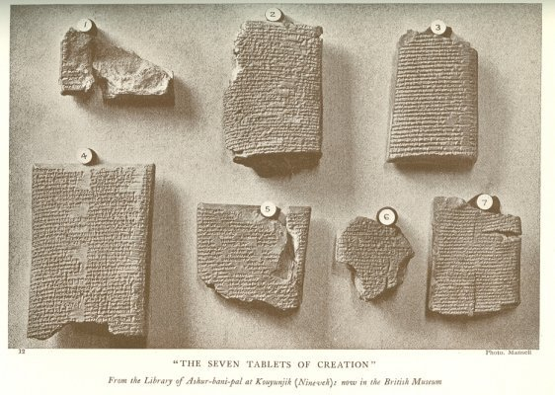 Image Caption: The Seven Tablets of Creation from the library of Ashur-bani-pal, Nineveh, now in the British Museum. Source: Paul Cooper (Twitter) [https://twitter.com/PaulMMCooper/status/937363263037329408]
In the 19th century, archaeologists at Nineveh discovered the library of King Ashurbanipal (668–627 BC). They found thousands of clay tablets written in Akkadian.
Image Caption: The Seven Tablets of Creation from the library of Ashur-bani-pal, Nineveh, now in the British Museum. Source: Paul Cooper (Twitter) [https://twitter.com/PaulMMCooper/status/937363263037329408]
In the 19th century, archaeologists at Nineveh discovered the library of King Ashurbanipal (668–627 BC). They found thousands of clay tablets written in Akkadian.
Among them was a 7-tablet Babylonian creation epic now known as Enuma Elish.
In it, Marduk kills his nemesis Tiamat and fillets her body, making sky and earth (EE IV 101-4; V 11, 62-65).
Legends of Tiamat existed as early as the Kassite ruler Agum I, ca. 17th century BC.
The myth and promotion of Marduk may date to the ascendancy of the First Babylonian dynasty (1894–1595 BC), when Marduk became a national god. A similar promotion of Marduk is seen in the first lines of the Code of Hammurabi (ca. 1754 BC).
Even though Genesis and Enuma Elish present world views that are distinct, they share a remarkable number of literary parallels.
EE Tablet I
- When the heavens above did not exist,
- And earth beneath had not come into being —
- There was Apsû, the first in order, their begetter,
- And demiurge Tia-mat, who gave birth to them all;
- They had mingled their waters together
- Before meadow-land had coalesced and reed-bed was to he found —
- When not one of the gods had been formed
- Or had come into being, when no destinies had been decreed,
- The gods were created within them
- …
EE Tablet IV
- He let fly an arrow and pierced her belly,
- He tore open her entrails and slit her inwards,
- He bound her and extinguished her life,
- He threw down her corpse and stood on it.
- …
- He split her into two like a dried fish:
- One half of her he set up and stretched out as the heavens.
EE Tablet V
- He fashioned heavenly stations for the great gods,
- And set up constellations, the patterns of the stars.
- He appointed the year, marked off divisions,
- …
- [(Thus) the half of her] he stretched out and made it firm as the earth.
- [After] he had finished his work
- [He spread] his net and let it right out.
- He surveyed the heavens and the earth … .
Enuma Eliš & Genesis
 Image Caption: Neo-Assyrian cylinder seal impression from 8th century BC, possibly a depiction of the slaying of Tiamat. Source: Enūma Eliš (Wikipedia) [https://en.wikipedia.org/wiki/En%C5%ABma_Eli%C5%A1]
Like Enuma Elish, Genesis describes the creator god ordering chaos.
Image Caption: Neo-Assyrian cylinder seal impression from 8th century BC, possibly a depiction of the slaying of Tiamat. Source: Enūma Eliš (Wikipedia) [https://en.wikipedia.org/wiki/En%C5%ABma_Eli%C5%A1]
Like Enuma Elish, Genesis describes the creator god ordering chaos.
In both accounts, darkness precedes order.
In Enuma Elish, the goddess Tiamat is the hypostatization of the chaotic sea; in Genesis, the “deep” (Hebrew תְהוֹם tĕhôm) is a formless abyss that God separates into ordered realms. Note how Akkadian Tiamat and Hebrew tĕhôm derive from a shared Semitic lexeme.
In both accounts, light exists before the creation of luminaries (sun, moon, stars).
In both accounts, the creator god divides waters above and below with an expanse that holds back the upper waters.
Both accounts follow a similar creation order, including division of waters, forming dry land, luminaries, and humanity, followed by rest.
Genesis 1:1 to 2:3 ⟡ Creation of Nature
In the first 34 verses of Genesis we find the most enduring and widely read of all creation accounts. It is the ground of all order in the world, and it establishes these great truths:
- God is the creator of the world, its plants and its creatures
- When God created the world, it was good, so God blessed it
- When God created humanity in His image, male and female, to rule and cultivate the land, it was very good, so God blessed them
- When God completed his work of creation, he blessed the day of His rest and set it apart
In this depiction is defined the natural order that God has established, all that is right (good) in the world.
Genesis 1:1
| א בְּרֵאשִׁית בָּרָא אֱלֹהִים אֵת הַשָּׁמַיִם וְאֵת הָאָרֶץ׃ | 1 In the beginning God created the heavens and the earth: |

Genesis 1:1 serves the same function that is served by the tôledôṯ passages that follow (2:4; 5:1; 6:9; 10:1, 32; 11:10, 27; 25:12, 13, 19; 36:1, 9; 37:2): Genesis 1:1 thus serves as a section heading for what follows in Genesis 1:2 to 2:3. In that way, it stands as a name or title in apposition to what follows.
Genesis 1:2
| ב וְהָאָרֶץ הָיְתָה תֹהוּ וָבֹהוּ, וְחֹשֶׁךְ עַל-פְּנֵי תְהוֹם; וְרוּחַ אֱלֹהִים מְרַחֶפֶת עַל-פְּנֵי הַמָּיִם׃ | 2 Now the earth was unformed and empty, and darkness was upon the surface of the deep; and the spirit of God hovered over the surface of the waters. |

Genesis 1:2 begins the account of creation by describing the state of the world before God had yet done anything to act upon the earth. The spirit of God merely takes up position hovering over the surface of the waters.
The earth is portrayed as a watery surface that was תֹהוּ 'formless' וָבֹהוּ 'and empty'. These two conditions set up the thematic symmetry of the days of creation that follow: in days 1 through 3 God divides the realms of the earth to give 'form' to what was formless, and in days 4 through 6 God fills, in turn, each newly formed realm to 'populate' each realm with its appropriate inhabitants.
Genesis 1:1–2:3 and the Gap Theory

It would seem to be overinterpretation to infer that Genesis 1:2 introduces a changed state of the world that somehow resulted from a gap in time after the first verse — as though the world had been fully created by God in 1:1 only to be destroyed and made formless and empty in 1:2 by some other force. By that interpretation, the creation account of Genesis 1:2 to 2:3 becomes rather an act of re-creation. On the contrary, it would seem to be the more straightforward reading to infer that Genesis 1:2 only defines the state of the world before God's establishment of order through creation.
Genesis 1:3-5 — Day 1
| ג וַיֹּאמֶר אֱלֹהִים, יְהִי אוֹר; וַיְהִי-אוֹר׃ | 3 And God said: 'Let there be light.' And there was light. |
| ד וַיַּרְא אֱלֹהִים אֶת-הָאוֹר, כִּי-טוֹב; וַיַּבְדֵּל אֱלֹהִים, בֵּין הָאוֹר וּבֵין הַחֹשֶׁךְ׃ | 4 And God saw the light, that it was good; and God divided the light from the darkness. |
| ה וַיִּקְרָא אֱלֹהִים לָאוֹר יוֹם, וְלַחֹשֶׁךְ קָרָא לָיְלָה; וַיְהִי-עֶרֶב וַיְהִי-בֹקֶר, יוֹם אֶחָד׃ {פ} | 5 And God called the light Day, and the darkness He called Night. And there was evening and there was morning, one day. {P} |

Genesis 1:6-8 — Day 2
| ו וַיֹּאמֶר אֱלֹהִים, יְהִי רָקִיעַ בְּתוֹךְ הַמָּיִם, וִיהִי מַבְדִּיל, בֵּין מַיִם לָמָיִם׃ | 6 And God said: 'Let there be a firmament in the midst of the waters, and let it divide the waters from the waters.' |
| ז וַיַּעַשׂ אֱלֹהִים, אֶת-הָרָקִיעַ, וַיַּבְדֵּל בֵּין הַמַּיִם אֲשֶׁר מִתַּחַת לָרָקִיעַ, וּבֵין הַמַּיִם אֲשֶׁר מֵעַל לָרָקִיעַ; וַיְהִי-כֵן׃ | 7 And God made the firmament, and divided the waters that were under the firmament from the waters that were above the firmament; and it was so. |
| ח וַיִּקְרָא אֱלֹהִים לָרָקִיעַ, שָׁמָיִם; וַיְהִי-עֶרֶב וַיְהִי-בֹקֶר, יוֹם שֵׁנִי׃ {פ} | 8 And God called the firmament Heaven. And there was evening and there was morning, a second day. {P} |
Genesis 1:9-13 — Day 3a
Genesis 1:9-10
| ט וַיֹּאמֶר אֱלֹהִים, יִקָּווּ הַמַּיִם מִתַּחַת הַשָּׁמַיִם אֶל-מָקוֹם אֶחָד, וְתֵרָאֶה, הַיַּבָּשָׁה; וַיְהִי-כֵן׃ | 9 And God said: 'Let the waters under the heaven be gathered together unto one place, and let the dry land appear.' And it was so. |
| י וַיִּקְרָא אֱלֹהִים לַיַּבָּשָׁה אֶרֶץ, וּלְמִקְוֵה הַמַּיִם קָרָא יַמִּים; וַיַּרְא אֱלֹהִים, כִּי-טוֹב׃ | 10 And God called the dry land Earth, and the gathering together of the waters called He Seas; and God saw that it was good. |

Genesis 1:11-13 — Day 3b
| יא וַיֹּאמֶר אֱלֹהִים, תַּדְשֵׁא הָאָרֶץ דֶּשֶׁא עֵשֶׂב מַזְרִיעַ זֶרַע, עֵץ פְּרִי עֹשֶׂה פְּרִי לְמִינוֹ, אֲשֶׁר זַרְעוֹ-בוֹ עַל-הָאָרֶץ; וַיְהִי-כֵן׃ | 11 And God said: 'Let the earth put forth grass, herb yielding seed, and fruit-tree bearing fruit after its kind, wherein is the seed thereof, upon the earth.' And it was so. |
| יב וַתּוֹצֵא הָאָרֶץ דֶּשֶׁא עֵשֶׂב מַזְרִיעַ זֶרַע, לְמִינֵהוּ, וְעֵץ עֹשֶׂה-פְּרִי אֲשֶׁר זַרְעוֹ-בוֹ, לְמִינֵהוּ; וַיַּרְא אֱלֹהִים, כִּי-טוֹב׃ | 12 And the earth brought forth grass, herb yielding seed after its kind, and tree bearing fruit, wherein is the seed thereof, after its kind; and God saw that it was good. |
| יג וַיְהִי-עֶרֶב וַיְהִי-בֹקֶר, יוֹם שְׁלִישִׁי׃ {פ} | 13 And there was evening and there was morning, a third day. {P} |

Genesis 1:14-19 — Day 4
| יד וַיֹּאמֶר אֱלֹהִים, יְהִי מְאֹרֹת בִּרְקִיעַ הַשָּׁמַיִם, לְהַבְדִּיל, בֵּין הַיּוֹם וּבֵין הַלָּיְלָה; וְהָיוּ לְאֹתֹת וּלְמוֹעֲדִים, וּלְיָמִים וְשָׁנִים׃ | 14 And God said: 'Let there be lights in the firmament of the heaven to divide the day from the night; and let them be for signs, and for seasons, and for days and years; |
| טו וְהָיוּ לִמְאוֹרֹת בִּרְקִיעַ הַשָּׁמַיִם, לְהָאִיר עַל-הָאָרֶץ; וַיְהִי-כֵן׃ | 15 and let them be for lights in the firmament of the heaven to give light upon the earth.' And it was so. |
| טז וַיַּעַשׂ אֱלֹהִים, אֶת-שְׁנֵי הַמְּאֹרֹת הַגְּדֹלִים: אֶת-הַמָּאוֹר הַגָּדֹל, לְמֶמְשֶׁלֶת הַיּוֹם, וְאֶת-הַמָּאוֹר הַקָּטֹן לְמֶמְשֶׁלֶת הַלַּיְלָה, וְאֵת הַכּוֹכָבִים׃ | 16 And God made the two great lights: the greater light to rule the day, and the lesser light to rule the night; and the stars. |
| יז וַיִּתֵּן אֹתָם אֱלֹהִים, בִּרְקִיעַ הַשָּׁמָיִם, לְהָאִיר, עַל-הָאָרֶץ׃ | 17 And God set them in the firmament of the heaven to give light upon the earth, |
| יח וְלִמְשֹׁל, בַּיּוֹם וּבַלַּיְלָה, וּלְהַבְדִּיל, בֵּין הָאוֹר וּבֵין הַחֹשֶׁךְ; וַיַּרְא אֱלֹהִים, כִּי-טוֹב׃ | 18 and to rule over the day and over the night, and to divide the light from the darkness; and God saw that it was good. |
| יט וַיְהִי-עֶרֶב וַיְהִי-בֹקֶר, יוֹם רְבִיעִי׃ {פ} | 19 And there was evening and there was morning, a fourth day. {P} |
Genesis 1:20-23 — Day 5
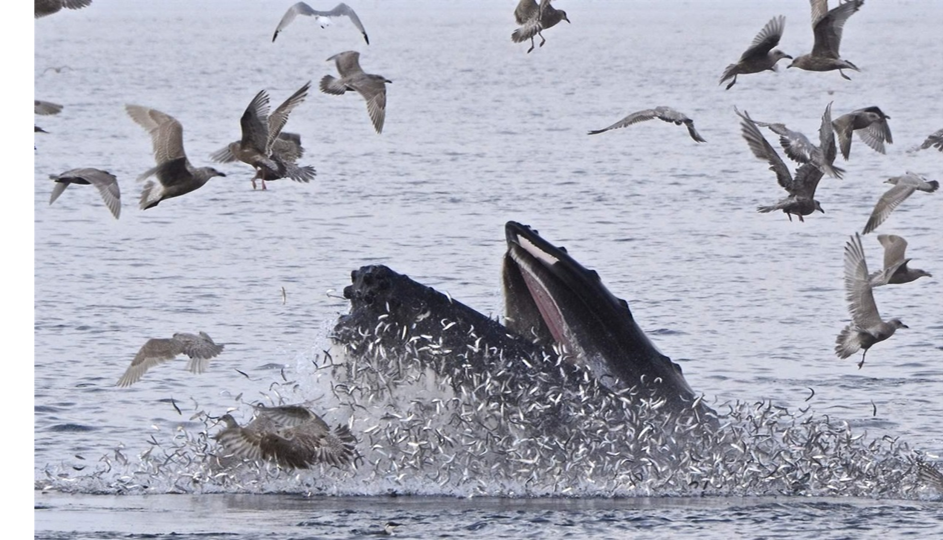
| כ וַיֹּאמֶר אֱלֹהִים--יִשְׁרְצוּ הַמַּיִם, שֶׁרֶץ נֶפֶשׁ חַיָּה; וְעוֹף יְעוֹפֵף עַל-הָאָרֶץ, עַל-פְּנֵי רְקִיעַ הַשָּׁמָיִם׃ | 20 And God said: 'Let the waters swarm with swarms of living creatures, and let fowl fly above the earth in the open firmament of Heaven.' |
| כא וַיִּבְרָא אֱלֹהִים, אֶת-הַתַּנִּינִם הַגְּדֹלִים; וְאֵת כָּל-נֶפֶשׁ הַחַיָּה הָרֹמֶשֶׂת אֲשֶׁר שָׁרְצוּ הַמַּיִם לְמִינֵהֶם, וְאֵת כָּל-עוֹף כָּנָף לְמִינֵהוּ, וַיַּרְא אֱלֹהִים, כִּי-טוֹב׃ | 21 And God created the great sea-monsters, and every living creature that wiggles, wherewith the waters swarmed, after its kind, and every winged fowl after its kind; and God saw that it was good. |
| כב וַיְבָרֶךְ אֹתָם אֱלֹהִים, לֵאמֹר: פְּרוּ וּרְבוּ, וּמִלְאוּ אֶת-הַמַּיִם בַּיַּמִּים, וְהָעוֹף, יִרֶב בָּאָרֶץ׃ | 22 And God blessed them, saying: 'Be fruitful, and multiply, and fill the waters in the seas, and let fowl multiply in the earth.' |
| כג וַיְהִי-עֶרֶב וַיְהִי-בֹקֶר, יוֹם חֲמִישִׁי׃ {פ} | 23 And there was evening and there was morning, a fifth day. {P} |
Genesis 1:24-25 — Day 6a
| כד וַיֹּאמֶר אֱלֹהִים, תּוֹצֵא הָאָרֶץ נֶפֶשׁ חַיָּה לְמִינָהּ, בְּהֵמָה וָרֶמֶשׂ וְחַיְתוֹ-אֶרֶץ, לְמִינָהּ; וַיְהִי-כֵן׃ | 24 And God said: 'Let the earth bring forth the living creature after its kind, cattle, and creeper, and beast of the earth after its kind.' And it was so. |
| כה וַיַּעַשׂ אֱלֹהִים אֶת-חַיַּת הָאָרֶץ לְמִינָהּ, וְאֶת-הַבְּהֵמָה לְמִינָהּ, וְאֵת כָּל-רֶמֶשׂ הָאֲדָמָה, לְמִינֵהוּ; וַיַּרְא אֱלֹהִים, כִּי-טוֹב׃ | 25 And God made the beast of the earth after its kind, and the cattle after their kind, and every creeper upon the ground after its kind; and God saw that it was good. |

Genesis 1:26-31 — Day 6b
| כו וַיֹּאמֶר אֱלֹהִים, נַעֲשֶׂה אָדָם בְּצַלְמֵנוּ כִּדְמוּתֵנוּ; וְיִרְדּוּ בִדְגַת הַיָּם וּבְעוֹף הַשָּׁמַיִם, וּבַבְּהֵמָה וּבְכָל-הָאָרֶץ, וּבְכָל-הָרֶמֶשׂ, הָרֹמֵשׂ עַל-הָאָרֶץ׃ | 26 And God said: 'Let us make man in our image, after our likeness; and let them have dominion over the fish of the sea, and over the fowl of the air, and over the cattle, and over all the earth, and over every creeping thing that creeps upon the earth.' |
| כז וַיִּבְרָא אֱלֹהִים אֶת-הָאָדָם בְּצַלְמוֹ, בְּצֶלֶם אֱלֹהִים בָּרָא אֹתוֹ: זָכָר וּנְקֵבָה, בָּרָא אֹתָם׃ | 27 And God created man in His own image, in the image of God created He him; male and female created He them. |
| כח וַיְבָרֶךְ אֹתָם, אֱלֹהִים, וַיֹּאמֶר לָהֶם אֱלֹהִים פְּרוּ וּרְבוּ וּמִלְאוּ אֶת-הָאָרֶץ, וְכִבְשֻׁהָ; וּרְדוּ בִּדְגַת הַיָּם, וּבְעוֹף הַשָּׁמַיִם, וּבְכָל-חַיָּה, הָרֹמֶשֶׂת עַל-הָאָרֶץ׃ | 28 And God blessed them; and God said unto them: 'Be fruitful, and multiply, and replenish the earth, and subdue it; and have dominion over the fish of the sea, and over the fowl of the air, and over every living thing that creeps upon the earth.' |
| כט וַיֹּאמֶר אֱלֹהִים, הִנֵּה נָתַתִּי לָכֶם אֶת-כָּל-עֵשֶׂב זֹרֵעַ זֶרַע אֲשֶׁר עַל-פְּנֵי כָל-הָאָרֶץ, וְאֶת-כָּל-הָעֵץ אֲשֶׁר-בּוֹ פְרִי-עֵץ, זֹרֵעַ זָרַע: לָכֶם יִהְיֶה, לְאָכְלָה׃ | 29 And God said: 'Behold, I have given you every herb yielding seed, which is upon the face of all the earth, and every tree, in which is the fruit of a tree yielding seed — to you it shall be for food; |
| ל וּלְכָל-חַיַּת הָאָרֶץ וּלְכָל-עוֹף הַשָּׁמַיִם וּלְכֹל רוֹמֵשׂ עַל-הָאָרֶץ, אֲשֶׁר-בּוֹ נֶפֶשׁ חַיָּה, אֶת-כָּל-יֶרֶק עֵשֶׂב, לְאָכְלָה; וַיְהִי-כֵן׃ | 30 and to every beast of the earth, and to every fowl of the air, and to every thing that creeps upon the earth, wherein there is a living soul, [I have given] every green herb for food.' And it was so. |
| לא וַיַּרְא אֱלֹהִים אֶת-כָּל-אֲשֶׁר עָשָׂה, וְהִנֵּה-טוֹב מְאֹד; וַיְהִי-עֶרֶב וַיְהִי-בֹקֶר, יוֹם הַשִּׁשִּׁי׃ {פ} | 31 And God saw every thing that He had made, and look, it was very good. And there was evening and there was morning, the sixth day. {P} |

Image Caption: Gudea, king of Lagash, Sumer, 2150–2125 BC. Source: Statue of Gudea (Flickr) [https://live.staticflickr.com/1441/23793457684_377cdbf629_b.jpg]
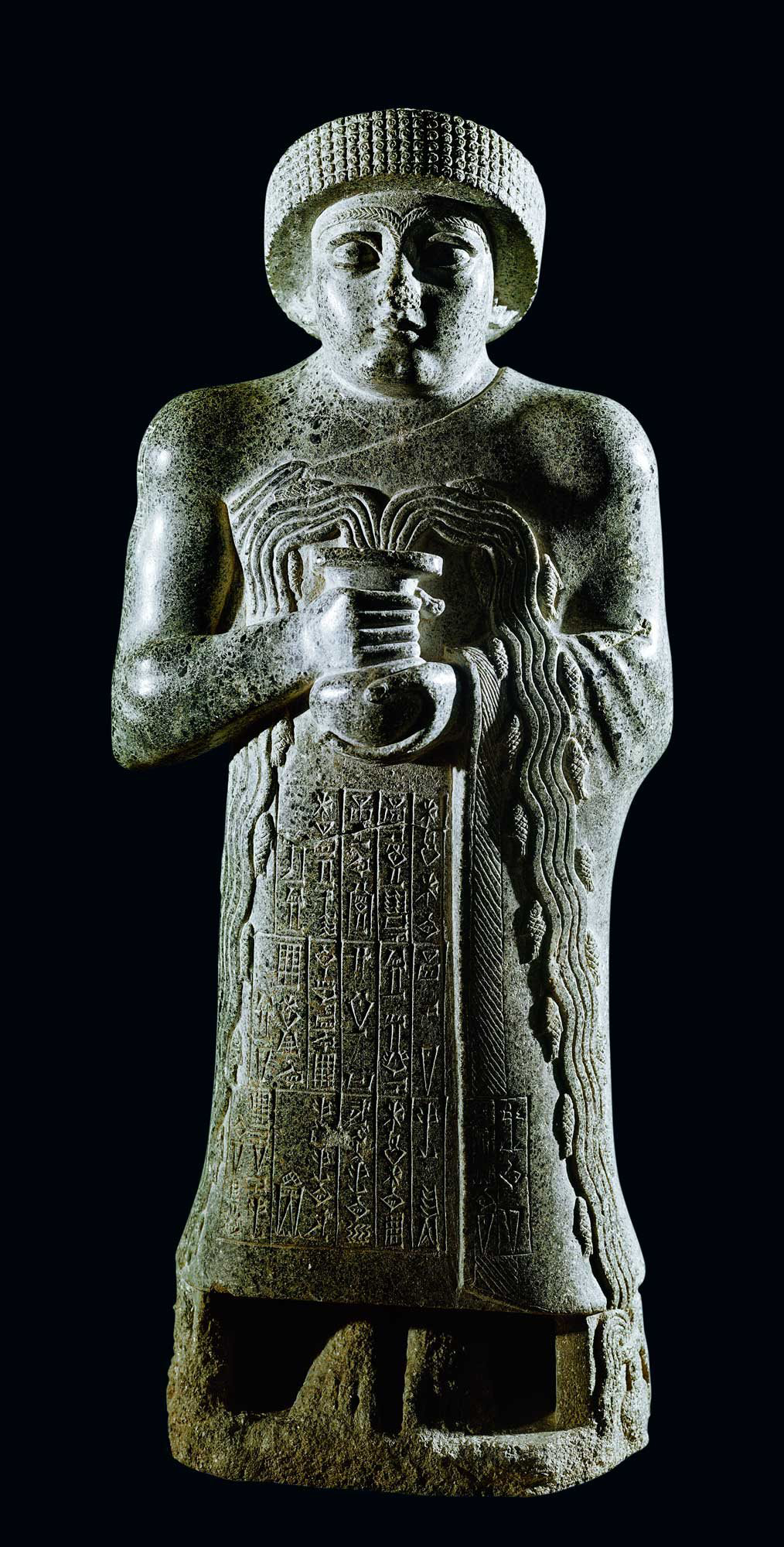
Image Caption: Gudea, king of Lagash, Sumer, 2150–2125 BC. Source: Gudea de Lagash (National Geographic: Historia) [https://www.nationalgeographic.com.es/medio/2015/06/17/138_gudea_5_1014x2000.jpg]
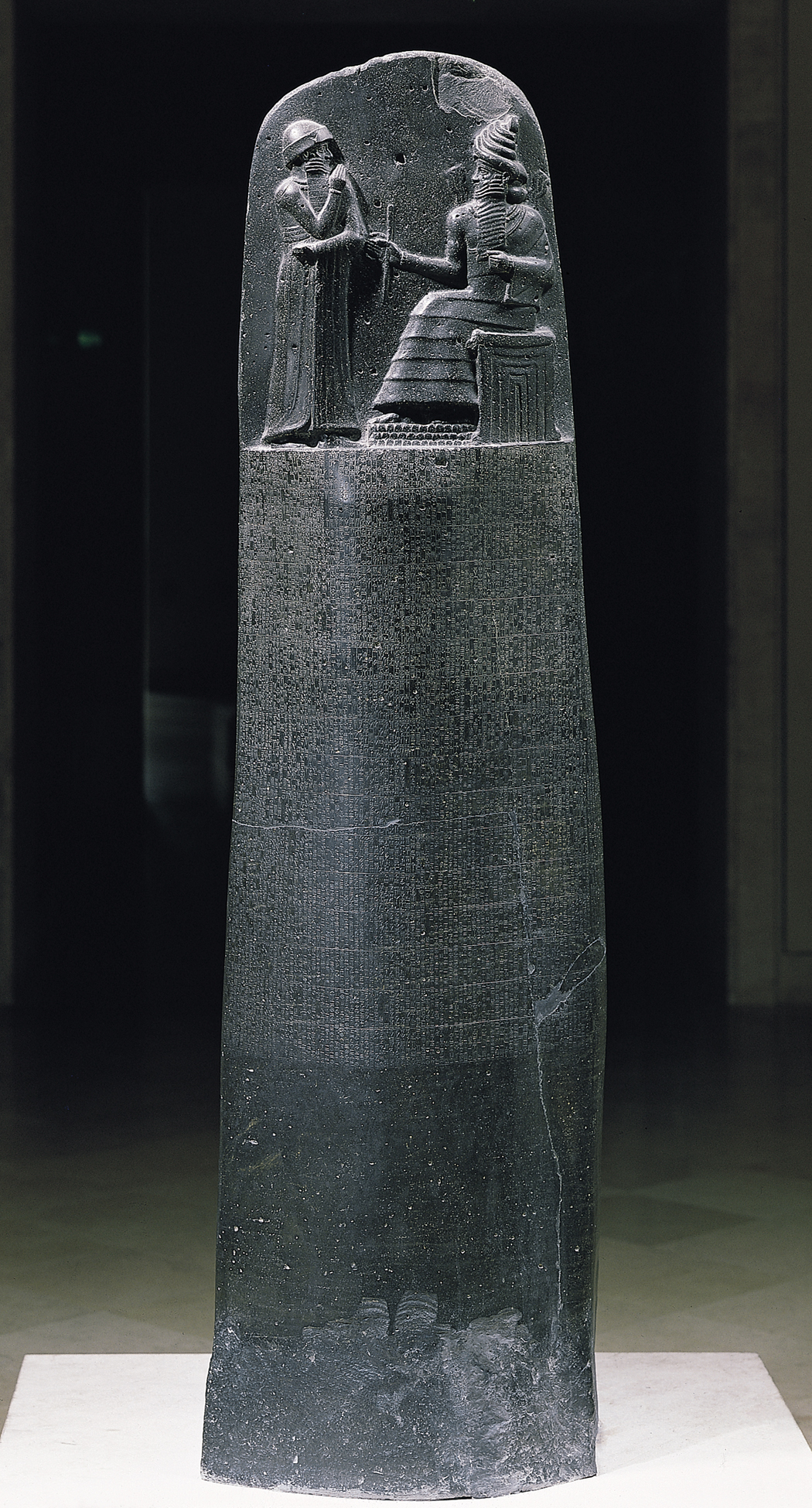
Image Caption: Stele of Hammurapi, sixth ruler of the First Dynasty of Babylon, 1792–1750 BC. Source: Law Code of Hammurabi (Art History Project) [https://arthistoryproject.com/timeline/the-ancient-world/mesopotamia/law-code-of-hammurabi-1/]

Image Caption: Depiction of Amorite king Hammurapi, first Dynasty of Babylon, 1792–1750 BC standing before god Shamash. The four-tiered headress of Shamash is typical of "Gods who Decree" (so Samuel Noah Kramer), which includes: Anu, Enlil, Enki, Ninhursag, Inanna, Nanna and Shamash. If the Burney Relief depicts Ereshkigal, then perhaps her, too. Source: Code of Hammurabi (Nemos Library) [https://i1.wp.com/nemoslibrary.com/wp-content/uploads/2016/01/code_of_hammurabi.jpg?fit=1609%2C2000&ssl=1]
Genesis 1:1-31 — Days 1 through 6
Day–Age Theory
 Image Caption: Geological Ages Of Creation. Source: Day created before the Sun? (Evidence for God's Unchanging Word) [https://www.unchangingword.com/creation-order/]
The Day–Age Theory came about as a way of explaining how there could be light on Day 1 before God had yet made any light source, such as sun and stars, on Day 4. The hypothesis avers that sun and stars were indeed the light sources for the light of Day 1, but that they weren't observable from Earth's surface until the atmosphere had cleared through a process of oxygenation after the sprouting of plants on Day 3b. It requires the phenomenological perspective of a being whose vantage point was at the surface of Earth (cf. 1:2). This is an inventive solution in that it presupposes an extended period of ages that took millennia or millions of years for each 'day'. Whether or not the scientific observation of long periods of geomorphology and evolution of life forms proves that such a process lies behind God's creative formation of the world, it would seem unlikely that an human author of a work formed during the Israelite Conquest and Monarchical Periods would have made such an assumption to explain the order of the days of creation.
Image Caption: Geological Ages Of Creation. Source: Day created before the Sun? (Evidence for God's Unchanging Word) [https://www.unchangingword.com/creation-order/]
The Day–Age Theory came about as a way of explaining how there could be light on Day 1 before God had yet made any light source, such as sun and stars, on Day 4. The hypothesis avers that sun and stars were indeed the light sources for the light of Day 1, but that they weren't observable from Earth's surface until the atmosphere had cleared through a process of oxygenation after the sprouting of plants on Day 3b. It requires the phenomenological perspective of a being whose vantage point was at the surface of Earth (cf. 1:2). This is an inventive solution in that it presupposes an extended period of ages that took millennia or millions of years for each 'day'. Whether or not the scientific observation of long periods of geomorphology and evolution of life forms proves that such a process lies behind God's creative formation of the world, it would seem unlikely that an human author of a work formed during the Israelite Conquest and Monarchical Periods would have made such an assumption to explain the order of the days of creation.
Cosmogony or Cosmology?
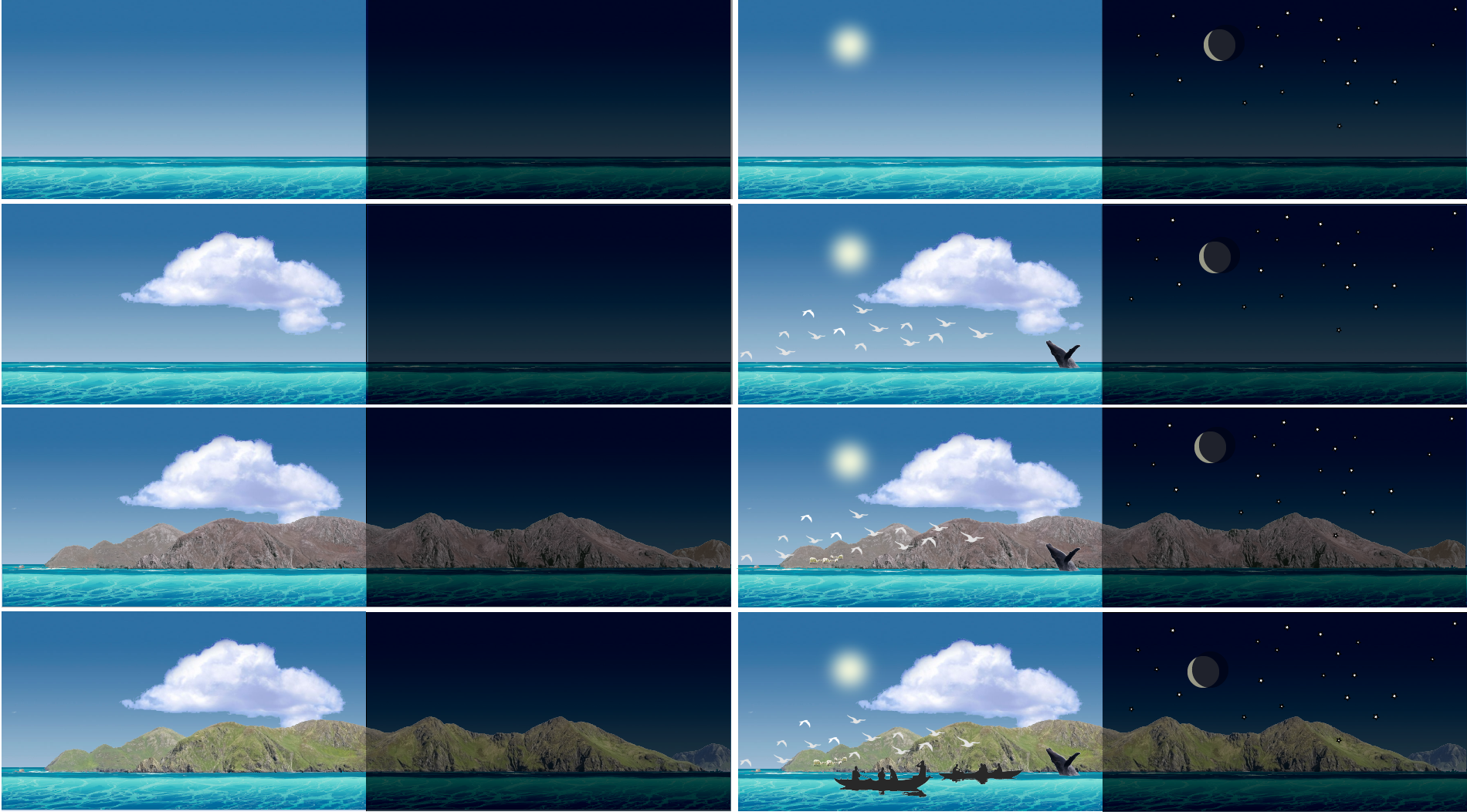 Image Caption: Genesis Cosmogony or Cosmology?
The ordering of the days of creation follows a bifid pattern established by the description 'formless and empty' in 1:2. Accordingly, in Days 1, 2, 3a, and 3b there is a 4-panel series showing how God divided the world to give it 'form', and in Days 4, 5, 6a, and 6b there is a parallel 4-panel series showing how God created bodies to 'fill' each form he made. This organizational model is more topical than chronological. It shows not how God made the world but claims that he made it.
Image Caption: Genesis Cosmogony or Cosmology?
The ordering of the days of creation follows a bifid pattern established by the description 'formless and empty' in 1:2. Accordingly, in Days 1, 2, 3a, and 3b there is a 4-panel series showing how God divided the world to give it 'form', and in Days 4, 5, 6a, and 6b there is a parallel 4-panel series showing how God created bodies to 'fill' each form he made. This organizational model is more topical than chronological. It shows not how God made the world but claims that he made it.
Earth Was Formless (Gen. 1:2) — God Formed Domains
On Days 1, 2, 3a, and 3b God created realms — day versus might, sky versus seas, land versus seas, and plants for the land — through a process of dividing, gathering, and sprouting.

Image Caption: Days 1 to 3: Forming Domains
Earth Was Empty (Gen. 1:2) — God Filled Domains
On Days 4, 5, 6a, and 6b God created occupants for each realm — sun, moon, and stars for day and night, fish and birds for sky and seas, animals for land, and mankind to cultivate plants.
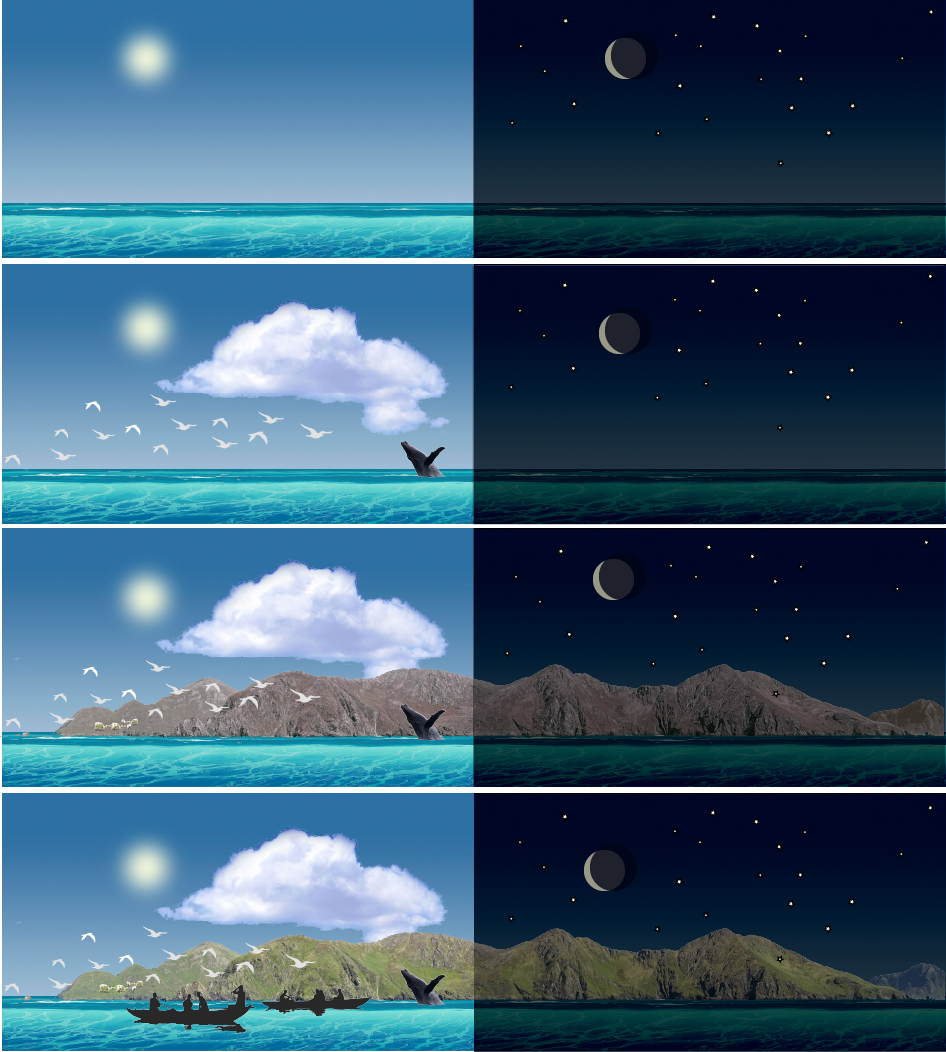
Image Caption: Days 4 to 6: Filling Domains
Cosmology, Not Cosmogony
What mankind receives from God is an Earth fully formed and filled with meaningful signs in the heavens and abundant creatures for humans to govern in the sky, seas, and land. The account of God's creation of nature is not a scientific cosmogony that proves how God created all things; rather, it is a topical cosmology that merely claims that God made all things as they now are. Every realm and observable life form was for humans already a given. Everything described in this account is observable to this day, and that's the point. God is its creator, and it is good. From this description, one can depict what became a common cosmology among cultures of the ancient Near East, particularly among those of Mesopotamia and the Levant.
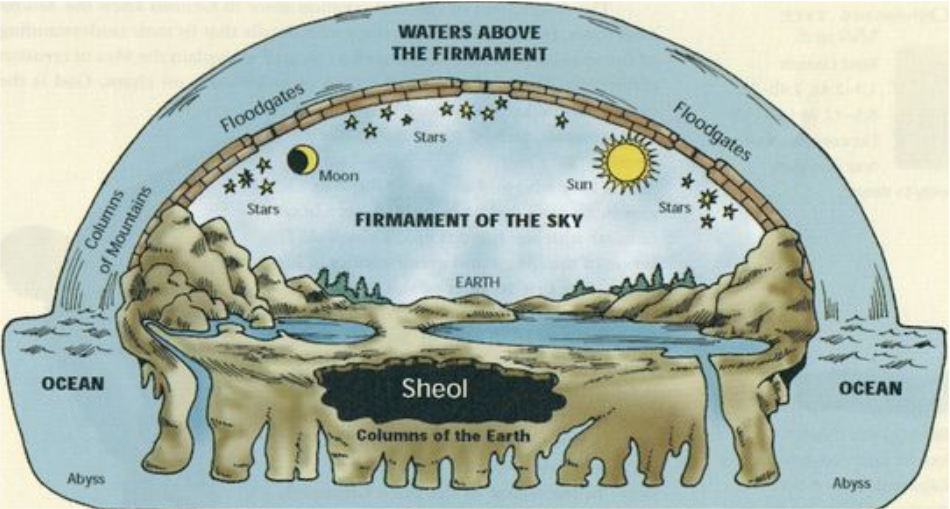
Image Caption: A Genesis Cosmology Source: Reading Genesis Literally (Pinterest) [https://www.pinterest.com/pin/398990848212781742/]
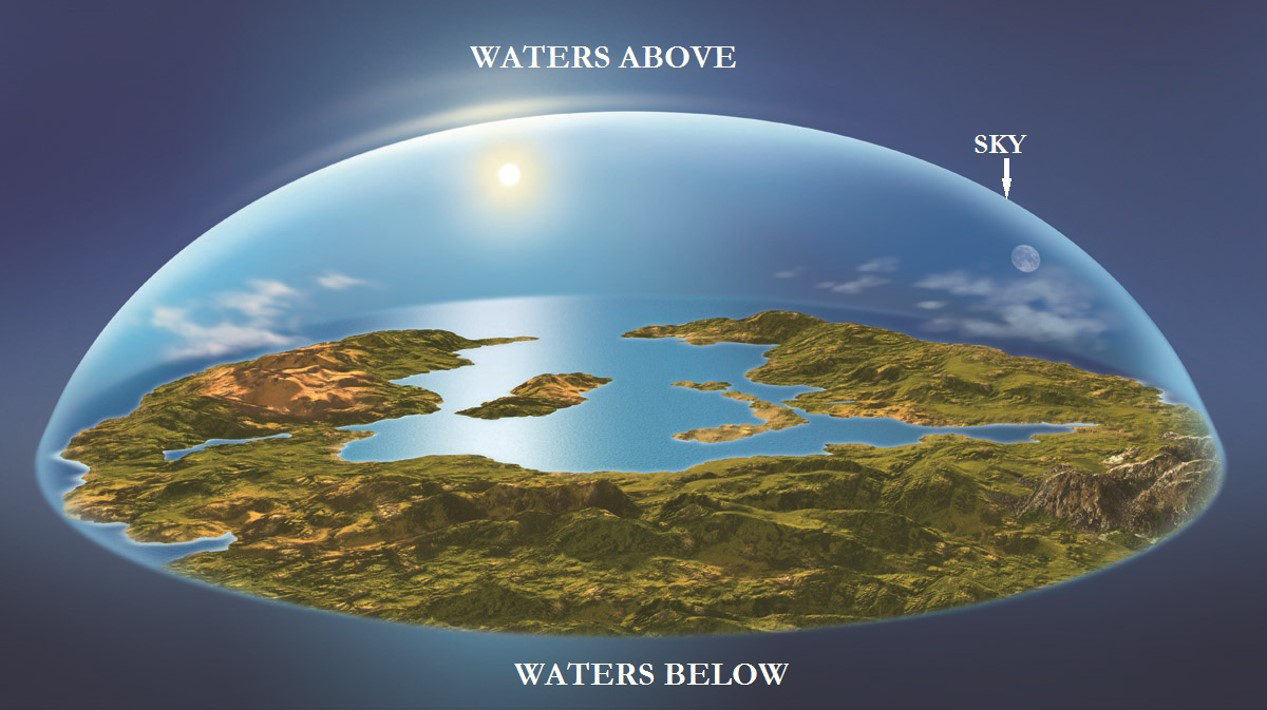
Image Caption: A Genesis Cosmology Source: A Visual Illustration of the Creation as Depicted in Genesis 1:6-14 (Contradictions in the Bible) [http://contradictionsinthebible.com/creation-as-depicted-in-genesis-1/]
Genesis 2:1-3 — Day 7
| א וַיְכֻלּוּ הַשָּׁמַיִם וְהָאָרֶץ, וְכָל-צְבָאָם׃ | 1 And the heaven and the earth were finished, and all the host of them. |
| ב וַיְכַל אֱלֹהִים בַּיּוֹם הַשְּׁבִיעִי, מְלַאכְתּוֹ אֲשֶׁר עָשָׂה; וַיִּשְׁבֹּת בַּיּוֹם הַשְּׁבִיעִי, מִכָּל-מְלַאכְתּוֹ אֲשֶׁר עָשָׂה׃ | 2 And on the seventh day God finished His work which He had made; and He rested on the seventh day from all His work which He had made. |
| ג וַיְבָרֶךְ אֱלֹהִים אֶת-יוֹם הַשְּׁבִיעִי, וַיְקַדֵּשׁ אֹתוֹ: כִּי בוֹ שָׁבַת מִכָּל-מְלַאכְתּוֹ, אֲשֶׁר-בָּרָא אֱלֹהִים לַעֲשׂוֹת׃ {פ} | 3 And God blessed the seventh day, and hallowed it; because that in it He rested from all His work which God in creating had made. {P} |

Summary
- Motifs of blessing and good in the account of the primordial week
- Three (3) times God is said to ‘bless’
- Twice in divine utterances
- On living creatures 1:22
- On humanity 1:28
- Once narrated: seventh day 2:3
- Twice in divine utterances
- Seven (7) times [6 + 1 pattern] narrator pronounces
- ‘God saw’ it was ‘good’ 1:4a, 10b, 12b, 18b, 21b, 25b;
- ‘very good’ in 1:31b
- Three (3) times God is said to ‘bless’
- Numerical patterning: The number seven (7) and, to some extent, three (3) are fundamental to the patterning in Gen. 1:1–2:3
- The section has seven (7) paragraphs, each for one day of the primordial week, ending with the epistrophe "and there was evening and there was morning, day N“
- The first verse has seven (7) words
- Each of the three nouns introduced in v. 1, "God," "heavens," "earth," recurs a multiple of seven (7) times: "God," 35 times (7x5); "earth," 21 times (7x3); "heavens," 21 times (7x3)
- The second verse has fourteen (7x2) words
- The seventh paragraph, for the seventh day, has thirty-five (7x5) words in five clauses/sentences, of which the middle three each contain seven words and mention "the seventh day"
- There are seven (7) references to either light or day in the first paragraph: five (5) times to "light"; two (2) times to "day“
- The word "water" occurs seven (7) times between paragraphs two and three: five (5) times in paragraph two; two (2) times in paragraph three
- There are seven (7) general references to light in the fourth paragraph: five (5) times as a noun; two (2) times as a verb
- Some form of the Hebrew word ḥayya, fem. adj. "living" or fem. nom. (opificum) "a being, animal," occurs eight (7+1) times between paragraphs five and six: four (4) times in the expression nepeš ḥayyâ "living (adj.) being" (1:20, 21, 24) or "living (adj.) breath" (1:30); three (3) times in the expression ḥayyat hāʼāreṣ "animal (nom.) of the land" (= wild beast) (1:24, 25, 30); and once as the nom. "animal" (1:28)
- The eleven utterances of God in the account (e.g., "and ... said, ..."; comprising 7+1 fiats; 2 blessings; 1 provision) may be subdivided into two sections:
- Eight (7+1) divine fiats of Days 1-6:
- "Let there be light" 1:3a (Day 1)
- "Let there be a firmament..." 1:6 (Day 2)
- "Let the waters...be gathered together..." 1:9a (Day 3A)
- "Let the earth put forth vegetation..." 1:11a (Day 3B)
- "Let there be lights/luminaries..." 1:14-15 (Day 4)
- "Let the waters bring forth swarms..." 1:20 (Day 5)
- "Let the earth bring forth..." 1:24 (Day 6A)
- "Let us make man..." 1:26 (Day 6B)
- Three (3) divine pronouncements (2 blessings, 1 provision):
- Blessing: "Be fruitful and multiply...fill...," to animals in 1:22 (Day 5)
- Blessing: "Be fruitful and multiply...fill...," to humanity in 1:28 (Day 6B)
- Provision: "Behold, I have given to you every plant yielding seed..." 1:29-30 (Day 6B)
- Eight (7+1) divine fiats of Days 1-6:
Note: For a summary of numerical patterns in Genesis 1:1–2:3, see U. Cassuto, A Commentary on the book of Genesis, Part I: From Adam to Noah [Jerusalem: Magnes Press, 1978], pp. 12-15.
Sources
- Enuma Elish (Ancient History Encylopedia) [https://www.ancient.eu/article/225/enuma-elish---the-babylonian-epic-of-creation---fu/]
- Enûma Eliš (Wikipedia) [https://en.wikipedia.org/wiki/En%C3%BBma_Eli%C5%A1]
- Enuma Elish — The Babylonian Epic of Creation — Full Text (World History Encyclopedia) [https://www.worldhistory.org/article/225/enuma-elish---the-babylonian-epic-of-creation---fu/]
- What kind of distinctive clothing depicted Sumerian gods? (StackExchange: Mythology & Folklore) [https://mythology.stackexchange.com/questions/308/what-kind-of-distinctive-clothing-depicted-sumerian-gods]