
Genesis: An Overview
Torah — תּוֺרָה
Genesis is the first of the first 5 books of the Bible, which are called the Torah or Pentateuch.
Hebrew תּוֺרָה (Torah) translates as 'instruction' or 'law'. Greek πεντατεύχος (Pentateuch) translates as 'five-volumed (book)'. Valentinian Ptolemy, in a letter to Flora, wrote the earliest known use of the Greek term πεντατεύχος around AD 150 to 175. The Hebrew term תּוֺרָה is over a millennium older.
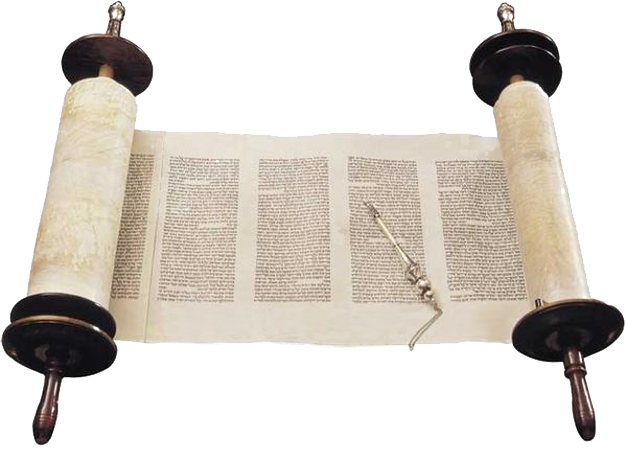
A traditional Torah scroll (Sefer Torah) is one continuous scroll that contains all 304,805 letters of Genesis, Exodus, Leviticus, Numbers, and Deuteronomy. A complete Torah scroll would require from 62 to 84 separate panels of parchment (klaf) stitched together.
Between the 2nd and 4th centuries AD, Greco-Roman cultures shifted from scrolls to codices (bound books with pages) to publish longer written works. Jewish cultures, however, continued to use scrolls for Hebrew and Aramaic Scripture reading until around AD 900. Indeed, traditional synagogues prefer to read Scripture from scrolls to this day.
Genesis — בְּרֵאשִׁ֖ית
The Hebrew name of Genesis is בְּרֵאשִׁ֖ית (bərēʾšît), which is actually the first word of the book, translated 'In the beginning'.
The title 'Genesis' derives from the Septuagint title, γένεσις (genesis), meaning literally 'birth', but figuratively 'origin, coming into being', and by metonymy (cause for effect) 'generation, issue, descendancy'. Thus, the title, Genesis, qualifies the book's genre as that of a genealogical narrative, which in large measure it is.
Genesis in the Bible
 (Enlarge image)
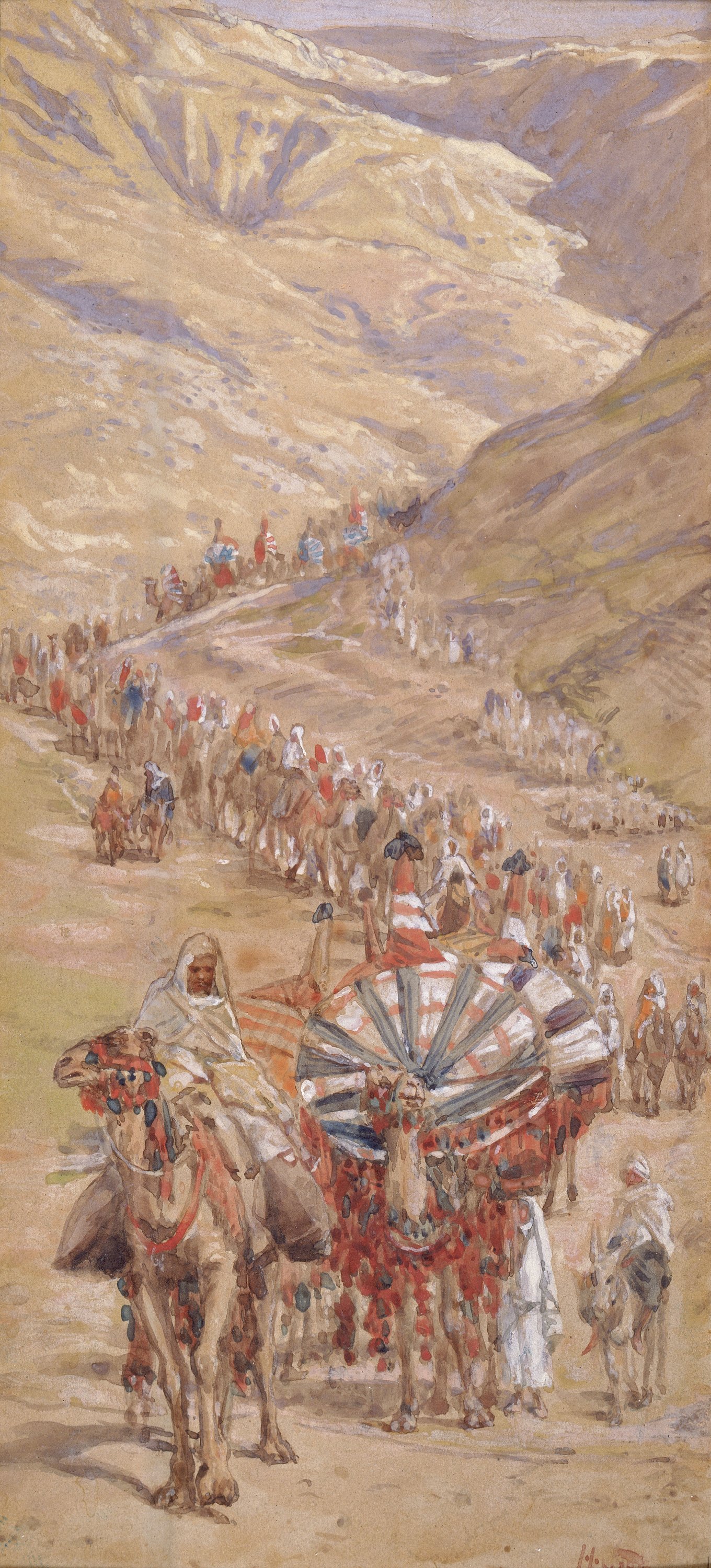
Image Caption: Painting by Jacques Tissot: The Caravan of Abraham. Source: Tissot The Caravan of Abraham (Wikimedia) [https://upload.wikimedia.org/wikipedia/commons/d/d2/Tissot_The_Caravan_of_Abraham.jpg]
With good reason, Genesis has in every age been the Bible’s foundational book. More than any other biblical book, Genesis discloses God's agenda in salvation history, to bless all the familes of the earth through Abraham's seed. So Genesis becomes not just a foundational text for every other biblical book but the formative text for every generation of faith that reads it.
(Enlarge image)
Image Caption: Painting by Jacques Tissot: The Caravan of Abraham. Source: Tissot The Caravan of Abraham (Wikimedia) [https://upload.wikimedia.org/wikipedia/commons/d/d2/Tissot_The_Caravan_of_Abraham.jpg]
With good reason, Genesis has in every age been the Bible’s foundational book. More than any other biblical book, Genesis discloses God's agenda in salvation history, to bless all the familes of the earth through Abraham's seed. So Genesis becomes not just a foundational text for every other biblical book but the formative text for every generation of faith that reads it.
Without Genesis, we would not well understand God’s purpose and love for Man on Earth, the basis of human moral failure, the conflict between good and evil, the role of judgment and death, the need of blood sacrifice, and the goal of God’s program to save Man from final judgment.
No book of the Bible is more essential for understanding where all things come from, why humans live, work, and die on Earth, and where all the peoples of the world should look for salvation.
Authorship
 (Enlarge image)
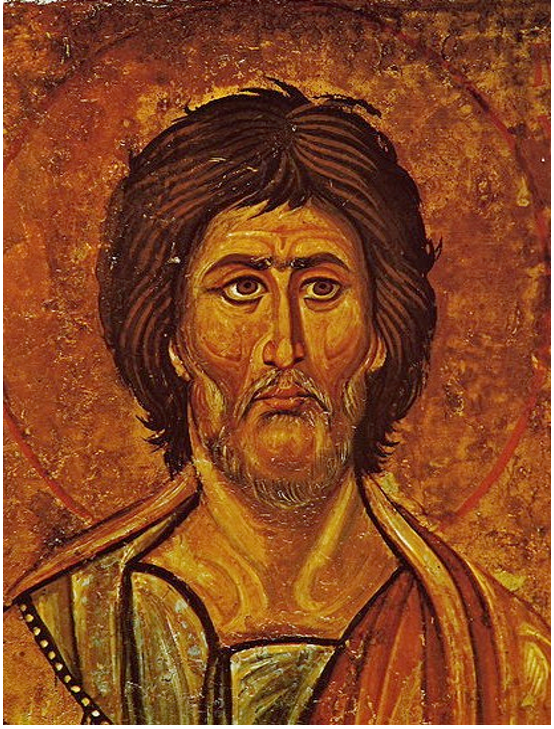
Image Caption: Moses Icon, St. Catherine’s Monastery, Sinai. Source: Category: Icons from Saint Catherine Monastery, Mount Sinai
(Wikimedia) [https://commons.wikimedia.org/wiki/Category:Icons_from_Saint_Catherine_Monastery,_Mount_Sinai]
Authorship of the Pentateuch is traditionally ascribed to Moses on the basis of
(Enlarge image)
Image Caption: Moses Icon, St. Catherine’s Monastery, Sinai. Source: Category: Icons from Saint Catherine Monastery, Mount Sinai
(Wikimedia) [https://commons.wikimedia.org/wiki/Category:Icons_from_Saint_Catherine_Monastery,_Mount_Sinai]
Authorship of the Pentateuch is traditionally ascribed to Moses on the basis of
- faith communities' long interpretative tradition
- thematic consistency among all the books of the Pentateuch
By the 1st century AD, it was already customary to refer to the Torah as the "Law of Moses", but the first explicit Jewish attribution of Mosaic authorship is in the Babylonian Talmud (200 to 500 AD): "Moses wrote his own book and the section concerning Balaam." Later, rabbis explained that God wrote the Torah in heaven before the world was created, in letters of black fire on parchment of white fire, and that Moses received it by divine dictation, writing the exact words spoken to him by God.
New Testament & Genesis
Jesus attributed authorship of the Law generally to Moses (John 5:46: 'If you believed Moses, you would believe me, for he wrote about me.'). This was a general attribution of authorship but refers to no specific books. In Mark 12:26 Jesus asks, "have you not read in the Book of Moses, in the account of the burning bush", which refers to a passage of Exodus. Even when Luke refers in Luke 24:27 to "Moses and all the Prophets", and when Jesus in verse 44 refers to "the Law of Moses, the Prophets, and the Psalms", the attribution of Mosaic authorship refers to no specific books of the Law, just to the Law generally. Attributions of this sort may be too broad to justify ascribing authorship of Genesis to Moses. When Jesus alludes to Genesis 1:27 ("at the beginning the Creator 'made them male and female'", Matthew 19:4; cf. Mark 10:6), he does not ascribe that verse to Moses but does ascribe to Moses laws concerning divorce (Matthew 19:8; Mark 10:3, 5; see the law in Deuteronomy 24:1–4; cf. a case in Exodus 21:10-11).
Paul in Galatians 4:21–22 alludes to Genesis 21 as 'the law': "are you not aware of what the law says? For it is written that Abraham had two sons, one by the slave woman and the other by the free woman." Paul here assigns to 'the law' the account of the banishment of Hagar by Sarah found in Genesis 21. Yet there is here no direct or implied ascription of Mosaic authorship for Genesis; Paul here merely includes Genesis as part of 'the Law' (i.e., the Torah), and so did most of his contemporaries. To this day, Jews and Christians agree that Genesis is part of the Torah, but that is not sufficient to suggest that Moses necessarily had a hand in compiling the materials of Genesis — so, even if Moses did have a hand in compiling some portion of Genesis, there is apostolic evidence of it.
Hebrew Bible & Genesis
The 'Book of the Covenent' mentioned in Exodus 24:4-7 offers no exact description of what form it took or what words it included. The 'Book of the Law of Moses' referenced in Joshua 8:31 makes no reference to Genesis — only to the requirement to make an altar of uncut stones (Exodus 20:25; Deuteronomy 27:5-6). If any part of Genesis had been included in the writings of Moses, we are not told.
When Deuteronomy 31:9-13 refers to 'this law' that 'Moses wrote' and gave to the Levites and elders to be read publicly during Succoth (Tabernacles) each Sabbatical year, it is difficult to say what form the law that Moses wrote had at the time. Some laws were added after Moses' death, such as laws concerning a city of refuge in the Half-tribe of Manasseh (Machir) east of the Jordan, following a migration that took place during the Conquest period (Joshua 17:14-17). These laws supplement the Mosaic grant to the transjordanian tribes of Reuben and Gad with a grant to the half-tribe of Manasseh (Numbers 32:33, 39-42), giving them, too, a city of refuge, Golan (Joshua 20:8; 21:27, 31; 1 Chronicles 6:71). Such post-Mosaic ammendments were needed to accommodate tribal movements and situational changes that took place after Moses.
Traditions & Genesis
Perhaps, we should admit that evidence for the authorship of Genesis is more lacking outside faith-traditions than we realized. Unlike attributions of Mosaic authorship to speeches 'Moses said' in other books of the Pentatuech, Genesis itself does not attribute Mosaic authorship to its narratives. With regard to Genesis, scholars have long noted ancient literary parallels to accounts in Genesis 1–11 that antedate Moses, yet these chapters and those that follow don't claim that it was Moses who compiled or revised such ancient accounts. Among the varied traditional accounts, there are disperate uses of divine names — אֱלֹהִים 'Elohim' (1:1-2:4a; 12–22), יְהוָה אֱלֹהִים 'YHWH Elohim' (2:4b-25), יְהוָה 'YHWH' (12:1-3), as well as the occasional use of archaic names, such as אֵל 'El' (14:18), אֵל עֶלְיוֹן 'El Elyon' (14:18-20), אֵל שַׁדַּי 'El Shaddai' (17:1), אֵל רֳאִי 'El Roi' (16:13), אֵל עוֹלָם 'El Olam' (21:33) — these names are used differently among the various accounts of Genesis, which many have understood to indicate that there were diverse cultural origins for different accounts. Indicators of distinct tribal origins are worth noting; indeed, the book of Genesis shows explicit interest in the origins of nations (decendants of Noah's sons) and even counter-Israelite tribal traditions (decendants of Ishmael and Esau).
Post-Mosaic Elements in Genesis
Further to the paucity of biblical sources ascribing Mosaic authorship for Genesis, there is also the difficulty of knowing exactly what form Genesis took, if its nascent form existed in the 15th century BC, that could be ascribed to Moses. Just as it's unlikely that Moses wrote those parts of Deuteronomy that speak from a vantage point west of the Jordan River ('across the Jordan' refers to land east of the Jordan in Deuteronomy 1:1, 5; 3:8, 20; 4:41, 49 — whereas Moses did not travel west of the Jordan [Deuteronomy 3:25-27]), and just as it's unlikely that Moses described his own death or other posthumous events in Deuteronomy 34, it's equally unlikely that Moses could have authored verses in Genesis that describe as history circumstances that we know occurred only after his death (e.g., Genesis 12:6; 13:7; 14:14; 36:31; 47:11; see below).
Genesis & Law
While there is narrative continuity extending from Genesis through Deutoeronomy, there is the significant distinction of genre among these books. It seems fair to categorize much of Exodus, Leviticus, Numbers, and Deuteronomy to the category 'law', since those books are dedicated to establishing the system of rituals, statutes, and ordinances that would define tribal Israel. As a genealogical narrative, however, Genesis belongs to a genre distinct from 'law'. True, Genesis as a whole serves by its eponymous examples as a moral 'teaching' (one meaning of Hebrew תּוֺרָה Torah), but do prescriptions and proscriptions as found in Exodus, Leviticus, Numbers or in the parenetic warnings of Deuteronomy match such genealogies or eponymous stories as found in Genesis? The materials of these books are differently sourced and differently ordered. Yet they dovetail in one respect: they share a rhetorical rationale that Israel has right and responsibility to take from Canaan the land that God promised to Abraham, Isaac, and Jacob.
The Rhetoric of Nascent Genesis
In its nascent form (initial form before additions from a post-Solomonic perspective), Genesis may have had a different rhetoric from that of the legal and parenetic works of the Torah. The rhetoric of nascent Genesis is more in keeping with that of a geopolitical charter, as though Genesis were intended to provide rationale for tribal Israel's offensive to take from 'acursed' Canaan that land YHWH had promised to Israel's fathers. The geo-political landscape of the Table of Nations (Genesis 10) and anachronistic references to 'land of the Philistines' in which Abraham sojourned (21:32, 34) and to the 'Philistine' rivalry with Isaac (26:1, 8, 14, 15, 18), whereas Philistine tribes did not arrive on the shores of Israel until 1180 BC, suggest that the intended audience of the nascent form of Genesis was still aware of Philistine coastal region holdings, which might place nascent Genesis forming sometime after the collapse of Philistine hegemony, between Israel's Iron Age IIA (1010 to 940 BC) and Iron IIB (940 to 722 BC) periods.
Summary of Authorship
Since Genesis itself ascribes no author either to its genealogies or episodic narratives, and since no biblical or authoritative external source names a human contributor to or compiler of the book, the contributors to and final compiler of Genesis may need to remain anonymous. Other than by faith acknowledging that Genesis as a whole was inspired by the encounters of the biblical patriarchs with their god, YHWH, naming its human contributors with assurance remains beyond our reach.
Oldest Manuscripts
The Septuagint (LXX), which is the Greek translation of the Hebrew Bible, includes a translation of Genesis, was likely completed in the 3rd century BC. This is the earliest manuscript evidence of the Book of Genesis. It is likely that the Book of Genesis had already attained canonical status long before the Jews of Alexandria in Egypt saw value in translating and using it in Greek translation, so it is reasonable to push back the canonical form of Genesis by at least decades, if not centuries.
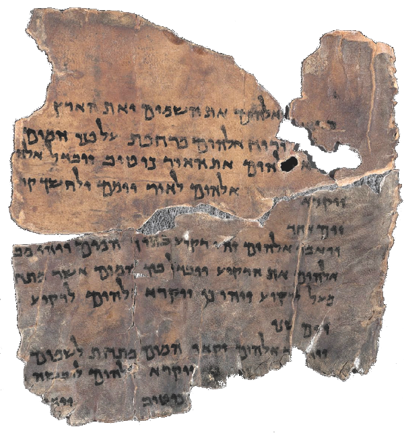 Image Caption: Dead Sea scroll fragment 4Q7 of Genesis 1:1-8. Source: Dead Sea Scrolls Archive [https://www.deadseascrolls.org.il/explore-the-archive/image/B-295096]
Before the discovery of the Dead Sea Scrolls (DSS), the oldest Hebrew-language manuscripts of Genesis were Masoretic texts dating to the 10th century AD, such as the Aleppo Codex. Today, the oldest known extant manuscripts of the Masoretic Text date from approximately the 9th century. The biblical manuscripts found among the Dead Sea Scrolls push that date back a full thousand years, to the 2nd century BC. (Wikipedia, Dead Sea Scrolls)
Image Caption: Dead Sea scroll fragment 4Q7 of Genesis 1:1-8. Source: Dead Sea Scrolls Archive [https://www.deadseascrolls.org.il/explore-the-archive/image/B-295096]
Before the discovery of the Dead Sea Scrolls (DSS), the oldest Hebrew-language manuscripts of Genesis were Masoretic texts dating to the 10th century AD, such as the Aleppo Codex. Today, the oldest known extant manuscripts of the Masoretic Text date from approximately the 9th century. The biblical manuscripts found among the Dead Sea Scrolls push that date back a full thousand years, to the 2nd century BC. (Wikipedia, Dead Sea Scrolls)
The DSS fragments of Genesis cover a range of passages from the first half of the book of Genesis.
- Dead Sea scroll fragments 1QGen (1Q1) of Genesis 1:18–21; 3:11–14; 22:13–15; 23:17–19; 24:22–24
- Dead Sea scroll fragments 2QGen (2Q1) of Genesis 19:27–28; 36:6, 35–37
- Dead Sea scroll fragments 4QGenesis-Exodus, 4Q(paleo)Gena-m (4Q1-12), including 4Q7 of Genesis 1:1-8
- Dead Sea scroll fragments 6QpaleoGen (6Q1) of Genesis 6:13–21
- Dead Sea scroll fragments 8QGen (8Q1) of Genesis 17:12–13, 15, 18–19; 18:20–22, 24–25
Alphabetic Writing
Genesis Traditions in Protoalphabetic Script (19th to 15th centuries BC)
While Semitic peoples resided in Egypt, in the 12th Dynasty (19th Century BC), alphabetic writing was invented. This is a period contemporary with the emergence and rise of the Hyksos peoples in Egypt, beginning in the 12th Dynasty but reaching prominence in the 15th Dynasty (1650 to 1550 BC). The authors of the Hebrew family traditions that are preserved in Genesis spoke a Semitic dialect: Hebrew.
The proto-Semitic alphabet first appears in 19th-century BC Egypt and seems to have been borrowed from consonants adapted from Hieroglyphic writing. However, unlike the syllabic writing of Hieroglyphs, the earliest written form of Semitic languages from 19th-century BC Egypt and thereafter was alphabetic (limited mostly to graphemes representing phonetic consonants). So, it is possible that the earliest writing system used to form the ancestral records found in Genesis was alphabetic proto-Hebrew.
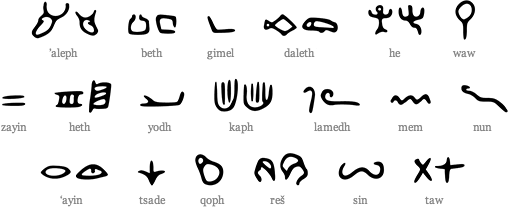
Image Caption: Proto-Canaanite or Proto-Hebrew Script: 19th to 15th Century BC. Source: The Serabit el-Khadim Sphinx (Codex 99) [http://codex99.com/typography/11.html]

Image Caption: Wadi el-Hol Inscription, 19th century BC. Source: Did Canaanites Create Hebrew Aleph-bet? (Blogspot) [https://e1b1b1-m35.blogspot.com/2013/01/did-canaanites-create-hebrew-aleph-bet.html]; cf. [https://blogger.googleusercontent.com/img/b/R29vZ2xl/AVvXsEg7e4HIDnbXyn2lCg4UdqM1M8aPzHpTDdnLnGkbki1Erdl2kVnzC13-yqfMRs01KaSWVdkRdLH94BqrUuijMQ7_zvKf7X5kStMKD2tSBoIat_7b6-GdebZzguX4YBQuKwrZiZagPtmQWT5D/s474/scritt_06.gif] Cf. John Coleman Darnell et al., Two Early Alphabetic Inscriptions from the Wadi el-Hol: New Evidence for the Origin of the Alphabet from the Western Desert of Egypt (AASOR, vol. 59, 2005, pp. 67-124) [https://www.scribd.com/document/491046450/Darnell-John-Coleman-Et-Al-Two-Early-Alphabetic-Inscriptions-From-the-Wadi-El-%E1%B8%A4ol-New-Evidence-for-the-Origin-of-the-Alphabet-From-the-West-59-Annual]
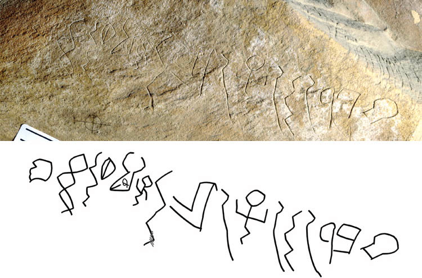
Image Caption: Wadi el-Hol Inscription, 19th century BC. Source: The Serabit el-Khadim Sphinx (Codex 99) [http://codex99.com/typography/11.html]
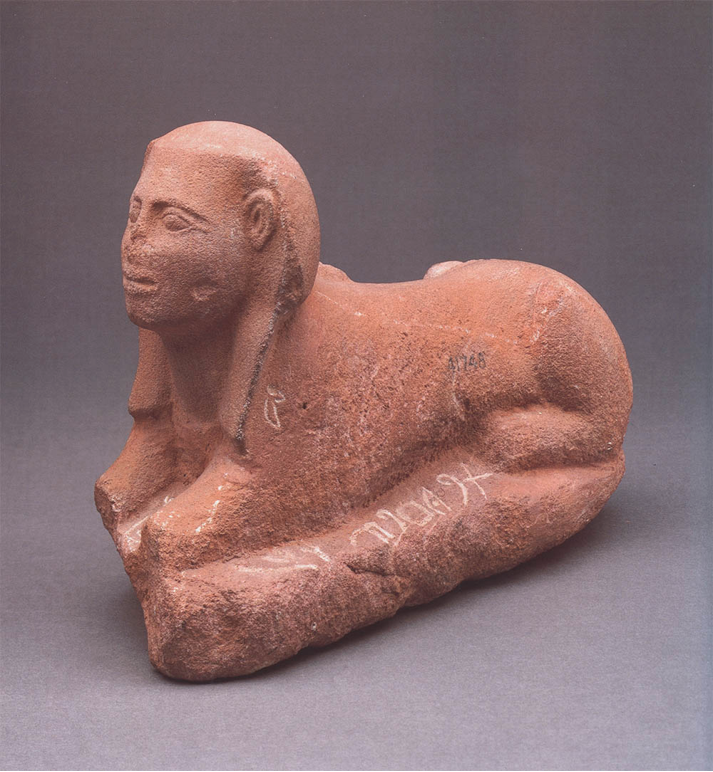
Image Caption: Serabit al-Khadim Sphinx, 1800 BC. Source: The Serabit el-Khadim Sphinx (Codex 99) [http://codex99.com/typography/11.html]
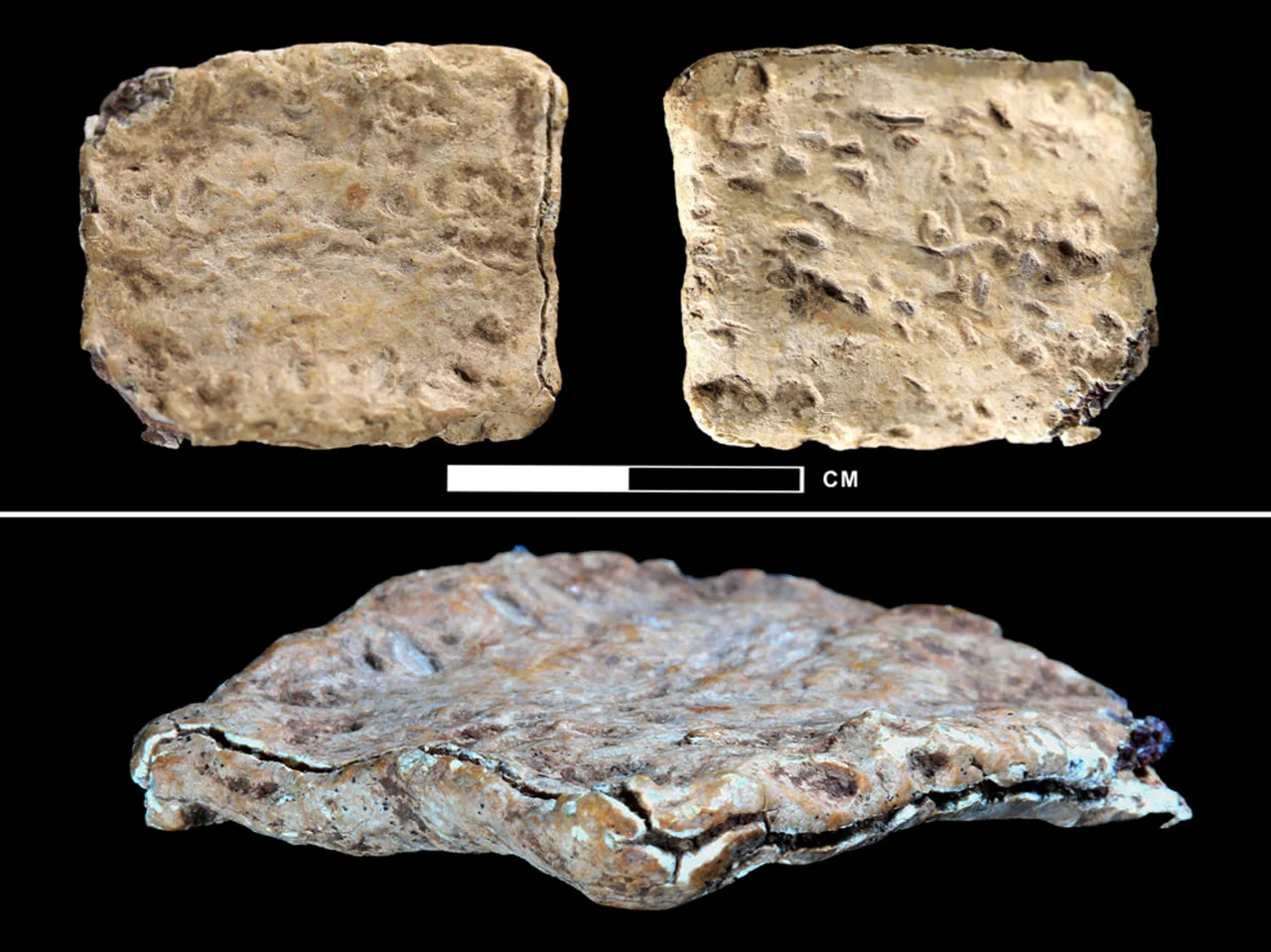
Image Caption: Mount Ebal Imprecation Text, folded lead tablet, 15th century BC. This curse tablet, on which ʾrwr 'cursed' occurs multiple times and the deity YHW twice, uses archaic alphabetic writing — older than paleo-Hebrew, says its discoverer, Scott Stripling. Source: Early Israelite Curse Inscription Found on Mt. Ebal (Haaretz) [https://www.haaretz.com/archaeology/.premium-early-israelite-curse-inscription-found-on-mt-ebal-1.10696926]

Image Caption: Divine name yhw from Mount Ebal Imprecation Text, 15th century BC. Source: An Early Israelite Curse Inscription from Mt. Ebal? (Biblical Archaeology) [https://www.biblicalarchaeology.org/wp-content/uploads/2022/04/A-schematic-rendering-of-the-name-YHW-in-the-Mt.-Ebal-inscription.-Courtesy-the-Associates-for-Biblical-Research..png]
Owing to the period when traditions preserved in Genesis were first formed, and owing to the presence of 'national' Israel in Egypt from the 19h to the 15th centuries BC, it is reasonable to infer that, if passed on in written form, the earliest traditions of the Book of Genesis were likely scribed using this alphabetic form of Semitic writing.
Protocanonical Genesis in Paleo-Hebrew Script (10th to 7th centuries BC)
The Hebrew prophets and writings from the period of Israel's monarchy allude to accounts described in detail in the corpus of Genesis (Ps 8 [creation of man to rule creation (Gen 2–3)]; Isa 1:9 [destruction of Sodom and Gomorrah (Gen 19)]; Isa 1:15 [Cain's murder of Abel (Gen 4:11-16)]; Isa 51:2 [the call of Abram (Gen 12:1-3)]; Ezek 33:24 [Abraham possessed the land (Gen 13:14-17)]; Ps 105:8-15 [wanderings of Abraham and Isaac (Gen 12–22)]; Ps 105:16-23 [Joseph in Egypt (Gen 39–49)]; Deut 26:5 [Jacob a wandering Aramean went to Egypt (Gen 25–49)]). The prevalence of mere allusions, not citations, may indicate that some accumulated form of the accounts we now find in Genesis was already known during Israel's monarchical period. Whether these accounts had during the monarchy been compiled into a unified written form similar to the form we now know remains to be proven. Still, it is reasonable to infer, that if a written form of Genesis existed in the time of the monarchy, it would have been written using the paleo-Hebrew alphabetical script.
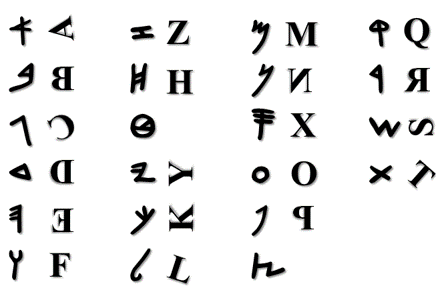
Image Caption: Early Paleo-Hebrew Alphabet, 10th century BC. Source: Jeff A. Benner, The Paleo-Hebrew Alphabet (Ancient Hebrew Research Center) [https://www.ancient-hebrew.org/ancient-alphabet/paleo-hebrew-alphabet.htm]
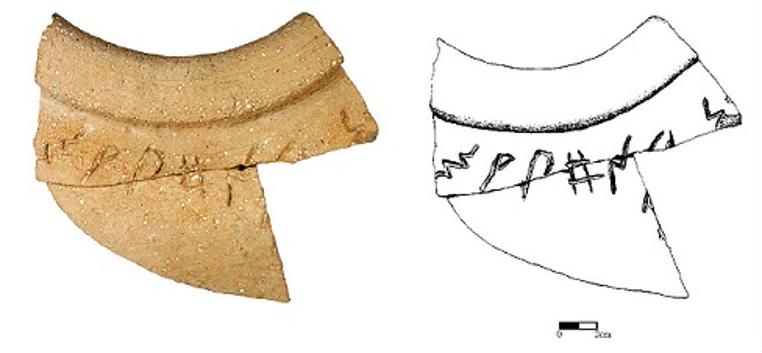
Image Caption: Jerusalem Temple Mount Inscription, 11th or 10th century BC. Source: Precursor to Paleo-Hebrew Script Discovered in Jerusalem (BAS) [https://www.biblicalarchaeology.org/daily/biblical-artifacts/inscriptions/precursor-to-the-paleo-hebrew-script-discovered-in-jerusalem/]

Image Caption: Tel Zayit Abecedary, 10th to 9th century BC. Source: The Tel Zayit Abecedary — c. 1020 B.C.E. (UASV Bible) [https://uasvbible.org/2025/10/26/the-tel-zayit-abecedary-c-1020-b-c-e/]
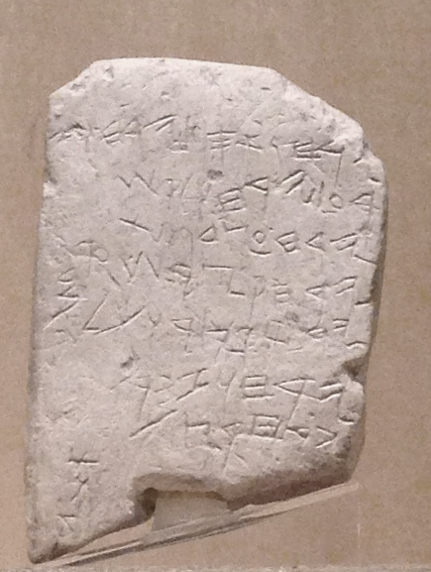
Image Caption: Gezer Calendar, ca. 925 BC. Source: Gezer calendar (Wikipedia) [https://en.wikipedia.org/wiki/Gezer_calendar#/media/File:Gezer_calendar_close_up.jpg]
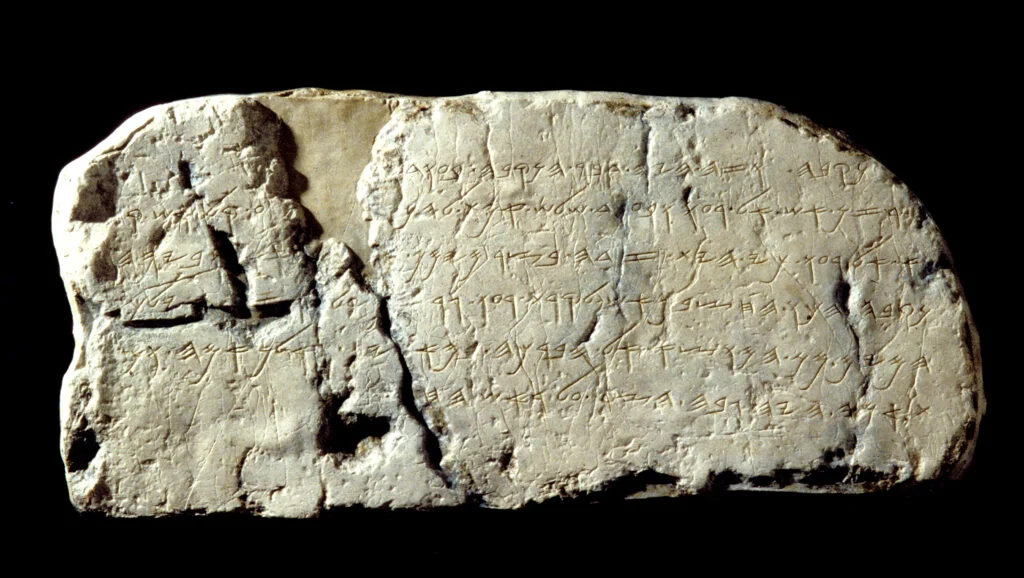
Image Caption: Siloam Inscription, 8th century BC. Source: The Siloam Inscription (CityofDavid.org) [https://cityofdavid.org.il/en/the-siloam-inscription-eng/]
Canonical Genesis in Aramaic Script (5th century BC)
The earliest extant manuscripts of the Hebrew book of Genesis are written in Hebrew using an Aramaic-style alphabetical script. This form of Genesis derives from post-Exilic editorial work that took place under the direction of the priest Ezra, who performed temple services according to the Law of Moses after his arrival in Jerusalem in 458 BC (Ezra 6:18; 7:6). Later, in 444 BC, Ezra read from the Book of Moses / the Book of the Law of YHWH (Ezra 7:10; Neh 8:1; 9:5-8 [citing creation, Abram's name changed to Abraham, the land covenant (Gen 1; 12–22)]). From summary details, it would seem that the creation account of Genesis 1 and of the Abrahamic covenant of Genesis 17 was included in the reading of that occasion.
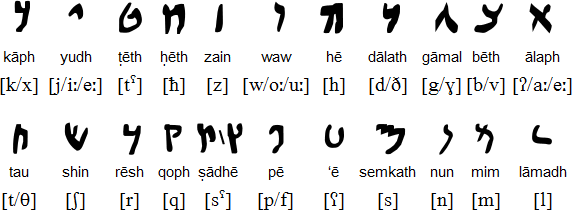
Image Caption: Aramaic Script: 5th Century BC. Source: Did ancient Hebrew come from the Aramaic language? (Quora) [https://www.quora.com/Did-ancient-Hebrew-come-from-the-Aramaic-language]
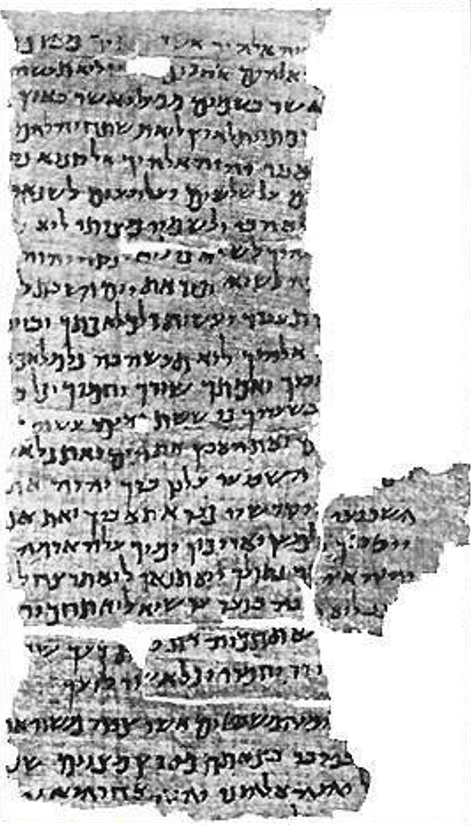
Image Caption: Nash Papyrus, 150-100 BC. Source: Nash Papyrus (Wikipedia) [https://en.wikipedia.org/wiki/Nash_Papyrus#/media/File:2nd_century_Hebrew_decalogue.jpg]
Early Hebrew Inscriptions
Literary Formation
Although no historical record in Genesis can have been written earlier than the events it describes, it certainly may have been written later. Some parts of Genesis derive from a period following Israel's conquest and some parts from conditions that inhere only after the period of Israel's monarchy.
Genesis 12:6
A narrative remark in Genesis that refers to Abram's time as a time when 'the Canaanite was then in the land' (Genesis 12:6) can only be construed as coming from a perspective when Canaanites no longer lived identifiably within the borders of Israel — something that likely occurred only after the Solomonic monarchy.
| ו וַיַּעֲבֹר אַבְרָם בָּאָרֶץ עַד מְקוֹם שְׁכֶם, עַד אֵלוֹן מוֹרֶה; וְהַכְּנַעֲנִי אָז בָּאָרֶץ׃ | 6 And Abram passed through the land unto the place of Shechem, unto the terebinth of Moreh. And the Canaanite was then in the land. |
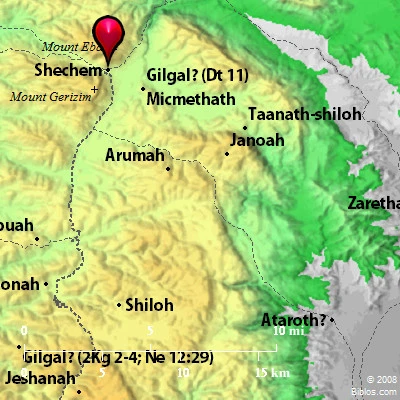
Image Caption: Map showing location of Shechem, between Mount Ebal and Mount Gerazim. Source: If I Could Teach the Bible (Wordpress) [https://ificouldteachthebible.files.wordpress.com/2012/10/map-of-shechem.jpeg]
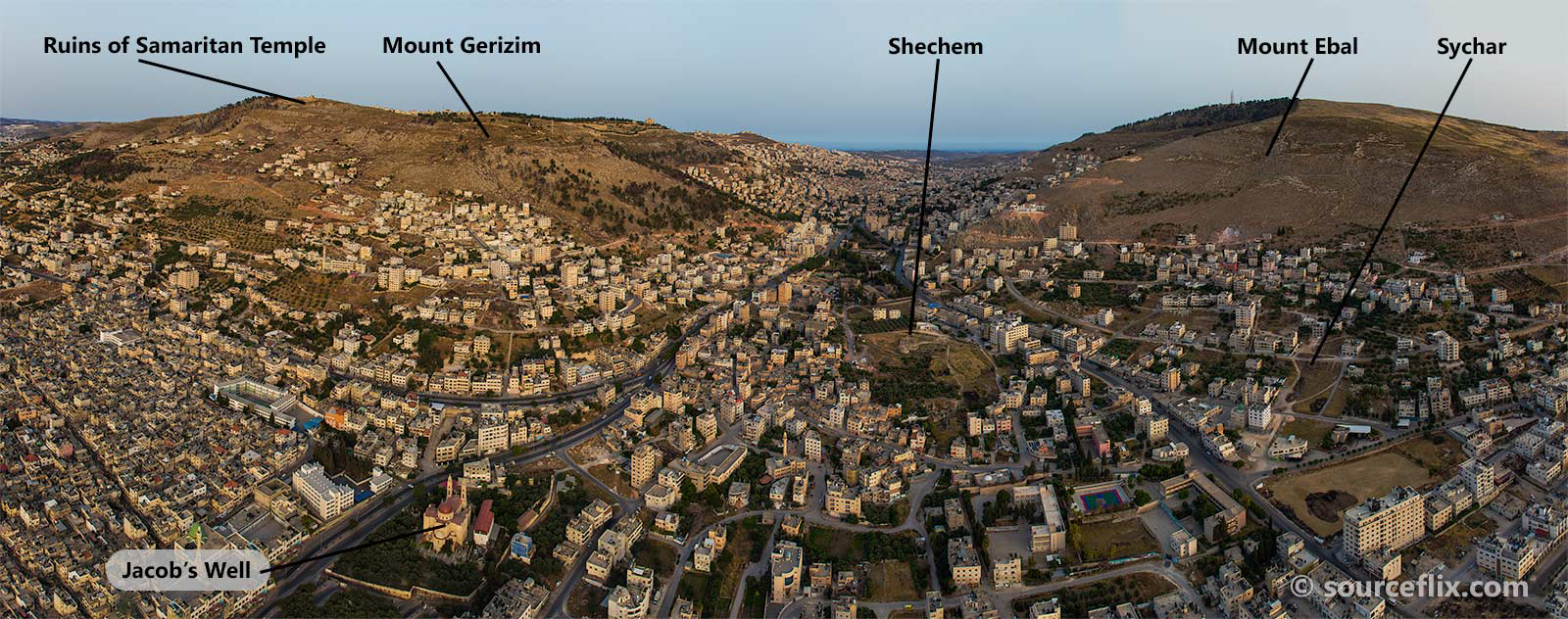
Image Caption: Aerial view of location of Shechem (modern Nablus) between Mounth Gerazim and Mount Ebal.Source: Shechem: Two Mountains and a Deep Well (Jacob's Well, July 14, 2015) [https://sourceflix.com/wp-content/uploads/2015/07/Shechem-Pano-with-Text-4w-1600x.jpg]
Genesis 13:7 (between Bethel and Ai, Gen. 13:3)
A similar comment from the Genesis narrator notifies the reader of the narrator's historical vantagepoint after Canaanites and Perizzites ceased to live as recognizable groups within Israel.
| ז וַיְהִי-רִיב בֵּין רֹעֵי מִקְנֵה-אַבְרָם, וּבֵין, רֹעֵי מִקְנֵה-לוֹט; וְהַכְּנַעֲנִי וְהַפְּרִזִּי אָז יֹשֵׁב בָּאָרֶץ׃ | 7 And there was a dispute between the herdsmen of Abram's cattle and the herdsmen of Lot's cattle. Now the Canaanite and the Perizzite then dwelt in the land. |
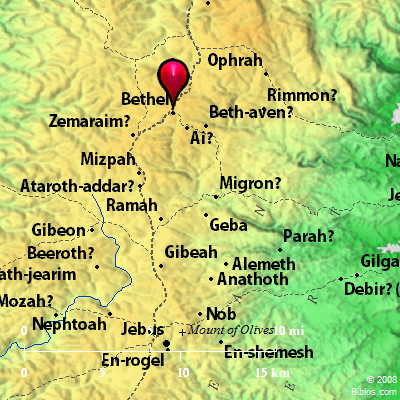
Image Caption: Map showing location of Bethel and Ai.Source: Bethel (Bible Atlas) [https://bibleatlas.org/area/bethel.jpg]

Image Caption: Aerial view of location of Bethel and Ai.Source: Bethel Ai (Google Earth)
Genesis 14:14
When the Genesis narrator references Abram's pursuit of Lot northward to the locale of Dan, a situation that occurred during the period of the Judges (Judg. 17–18), it's evident that the narrator shared with his readers a historical vantagepoint long after the Danite migration was well known. The Danites settled Tel Dan (formerly Canaanite Leshem / Laish) in the late Bronze to early Iron Age transition, around the 12th–11th century BC (ca. 1150–1050 BC).
| יד וַיִּשְׁמַע אַבְרָם, כִּי נִשְׁבָּה אָחִיו; וַיָּרֶק אֶת-חֲנִיכָיו יְלִידֵי בֵיתוֹ, שְׁמֹנָה עָשָׂר וּשְׁלֹשׁ מֵאוֹת, וַיִּרְדֹּף, עַד-דָּן׃ | 14 And when Abram heard that his brother was taken captive, he led forth his trained men, born in his house, three hundred and eighteen, and pursued as far as Dan. |
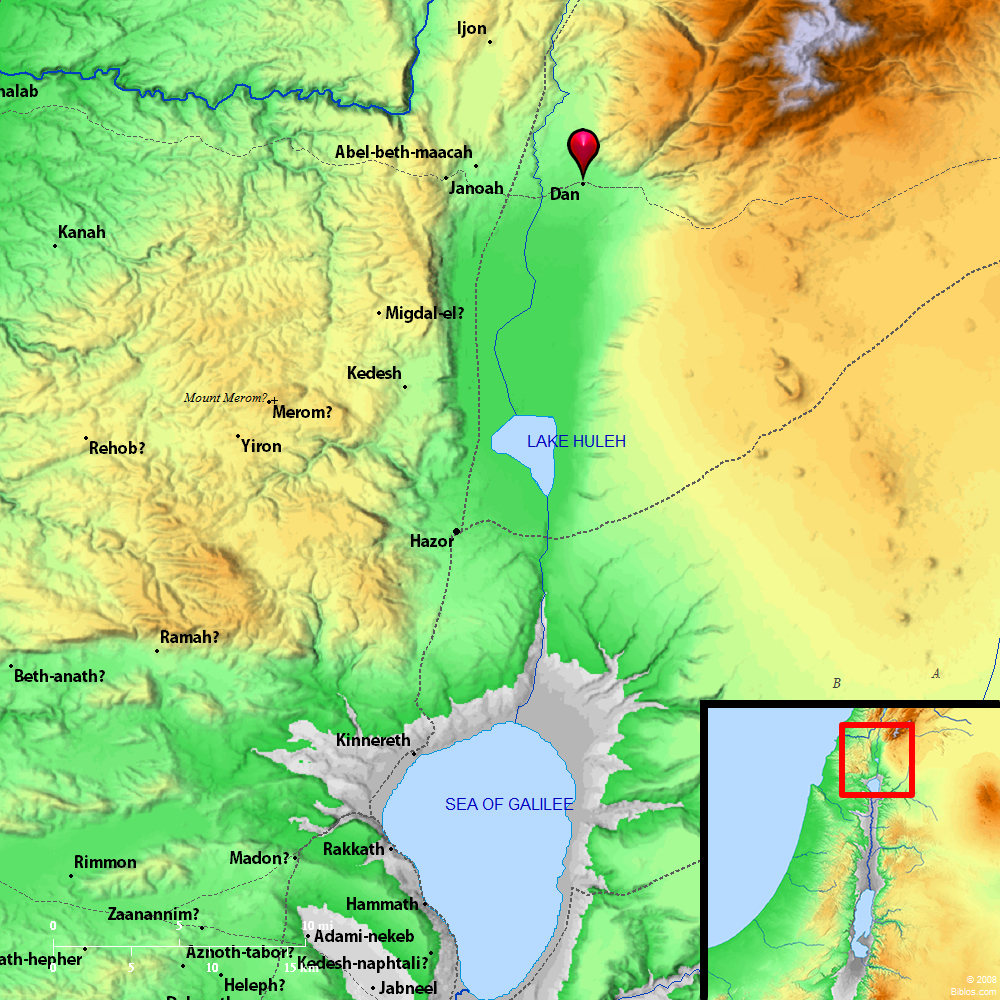
Image Caption: Map showing general location of Dan (Leshem).Source: Dan (Bible Atlas) [https://bibleatlas.org/full/dan.htm]
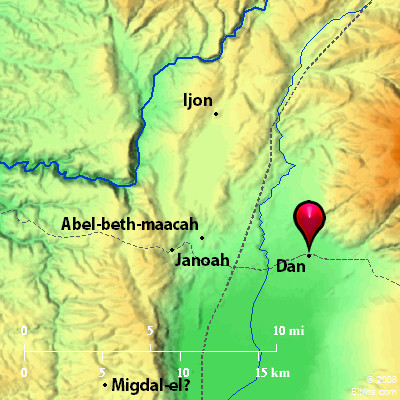
Image Caption: Map showing vicinity of Dan (Leshem).Source: Leshem (Dan) (Bible Atlas) [https://bibleatlas.org/leshem.htm]
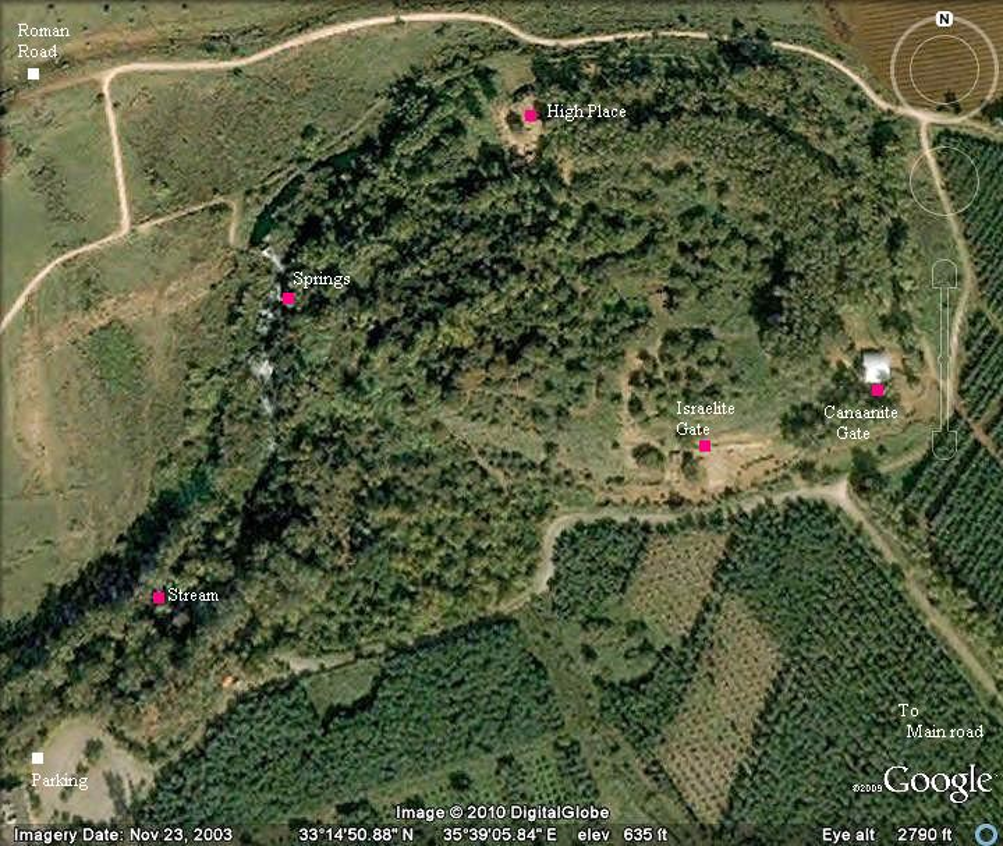
Image Caption: Aerial view of Tel Dan.Source: Tel Dan (Google Earth)
Genesis 36:31
The Genesis narrator's reference to the existence of kings in Israel evinces a historical perspective that occurred after the rise of monarchy in Israel.
| לא וְאֵלֶּה, הַמְּלָכִים, אֲשֶׁר מָלְכוּ, בְּאֶרֶץ אֱדוֹם--לִפְנֵי מְלָךְ-מֶלֶךְ, לִבְנֵי יִשְׂרָאֵל׃ | 31 And these are the kings that reigned in the land of Edom, before there reigned any king over the sons of Israel. |
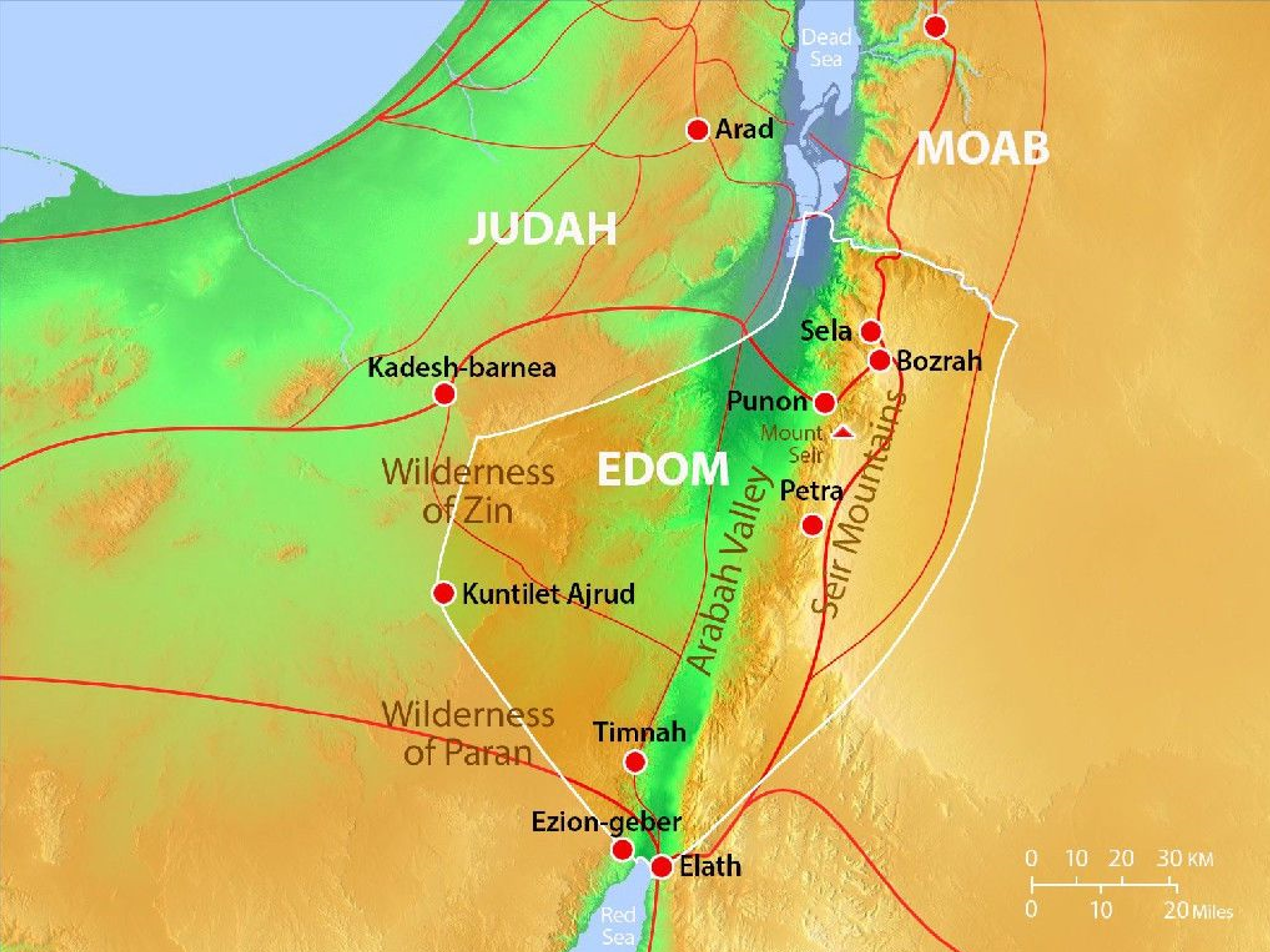
Image Caption: Map showing location of Edom, south of the Dead Sea.Source: Edom (Bible Atlas) [https://bibleatlas.org/edom.htm]

Image Caption: Satellite image and roads of Edom.Source: Bethel Ai (Google Earth)
Genesis 47:11
By a proleptic anachronism, the Genesis narrator refers to the place of Jacob's settlement in Egypt as the 'land of Rameses' though none of the contemporaries of Jacob and Joseph would have known a 19th Dynasty pharaoh Rameses II (ca. 1279–1213 BC).
Source: Ramesses II in hieroglyphs (Pharaoh.se) [https://pharaoh.se/ancient-egypt/pharaoh/ramesses-ii/].
| יא וַיּוֹשֵׁב יוֹסֵף אֶת-אָבִיו וְאֶת-אֶחָיו, וַיִּתֵּן לָהֶם אֲחֻזָּה בְּאֶרֶץ מִצְרַיִם, בְּמֵיטַב הָאָרֶץ בְּאֶרֶץ רַעְמְסֵס--כַּאֲשֶׁר, צִוָּה פַרְעֹה׃ | 11 And Joseph settled his father and his brothers, and gave them a possession in the land of Egypt, in the best of the land, in the land of Rameses, as Pharaoh had commanded. |
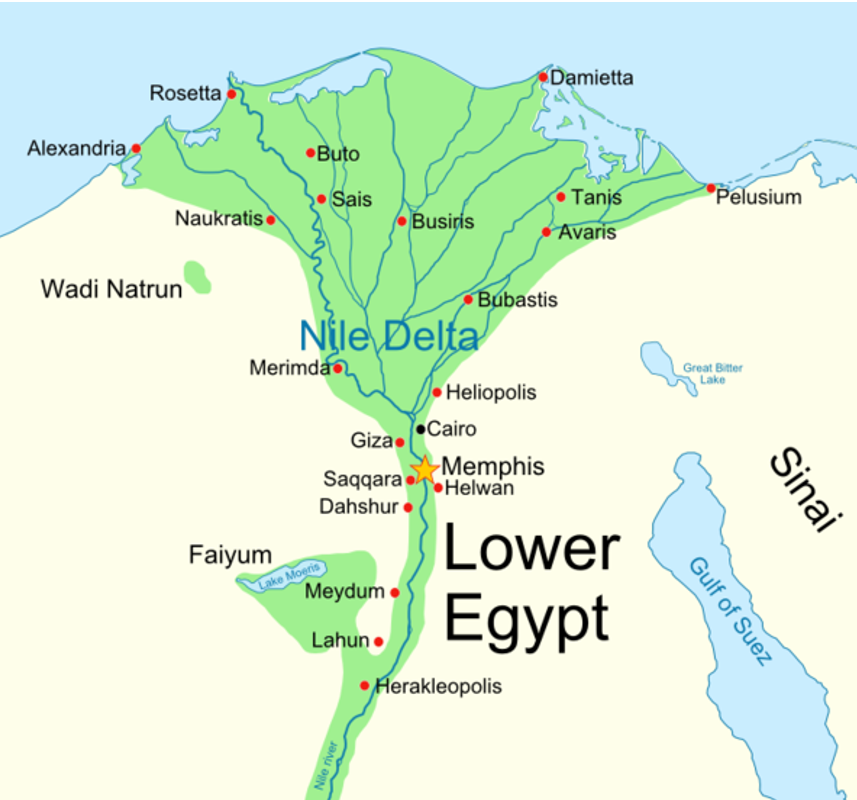
Image Caption: Map showing general location of Rameses (Avaris).Source: Avaris (Bible Atlas)
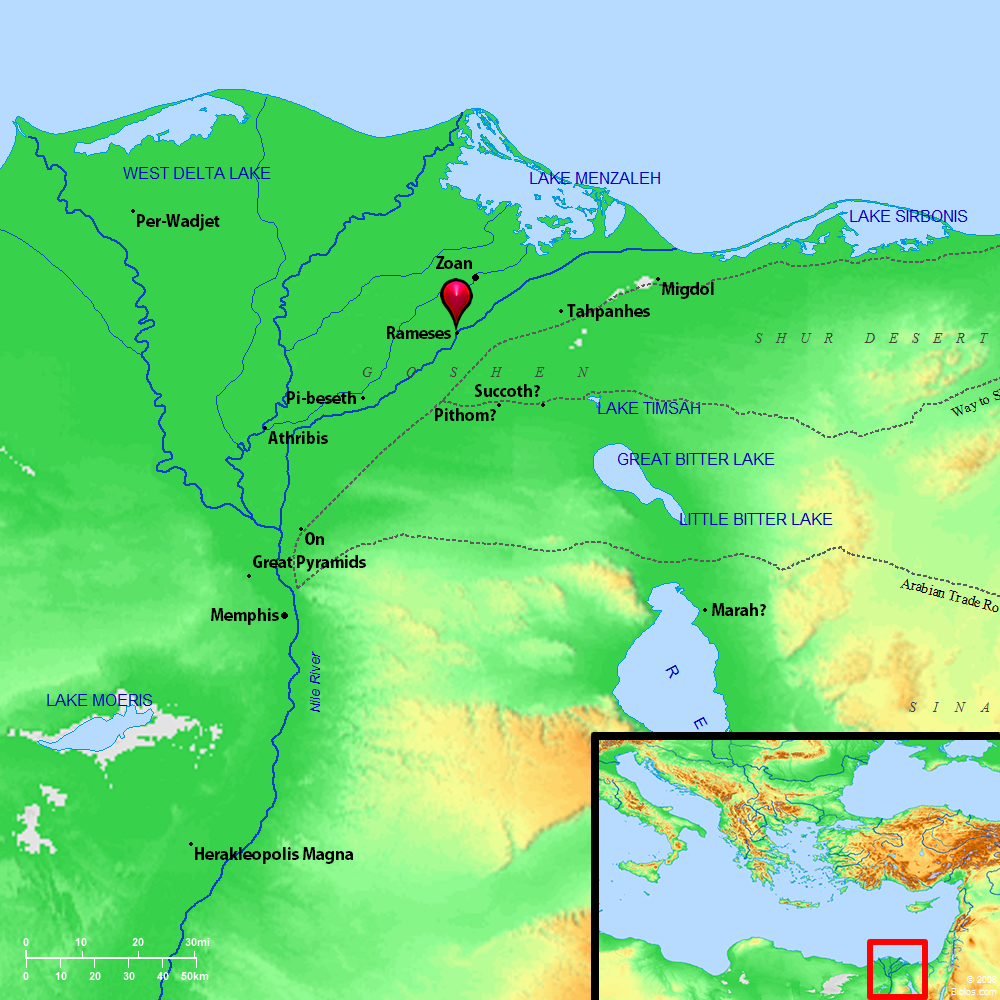
Image Caption: Map showing location of Rameses (Avaris).Source: Rameses (Bible Atlas) [https://bibleatlas.org/rameses.htm]

Image Caption: Aerial schematic of Rameses and Avaris.Source: Schematic of Rameses and Avaris (Patterns of Evidence: Exodus) in Joseph Tomb and Palace at Avaris (YouTube) [https://www.youtube.com/watch?v=3f2nqErmcJs]
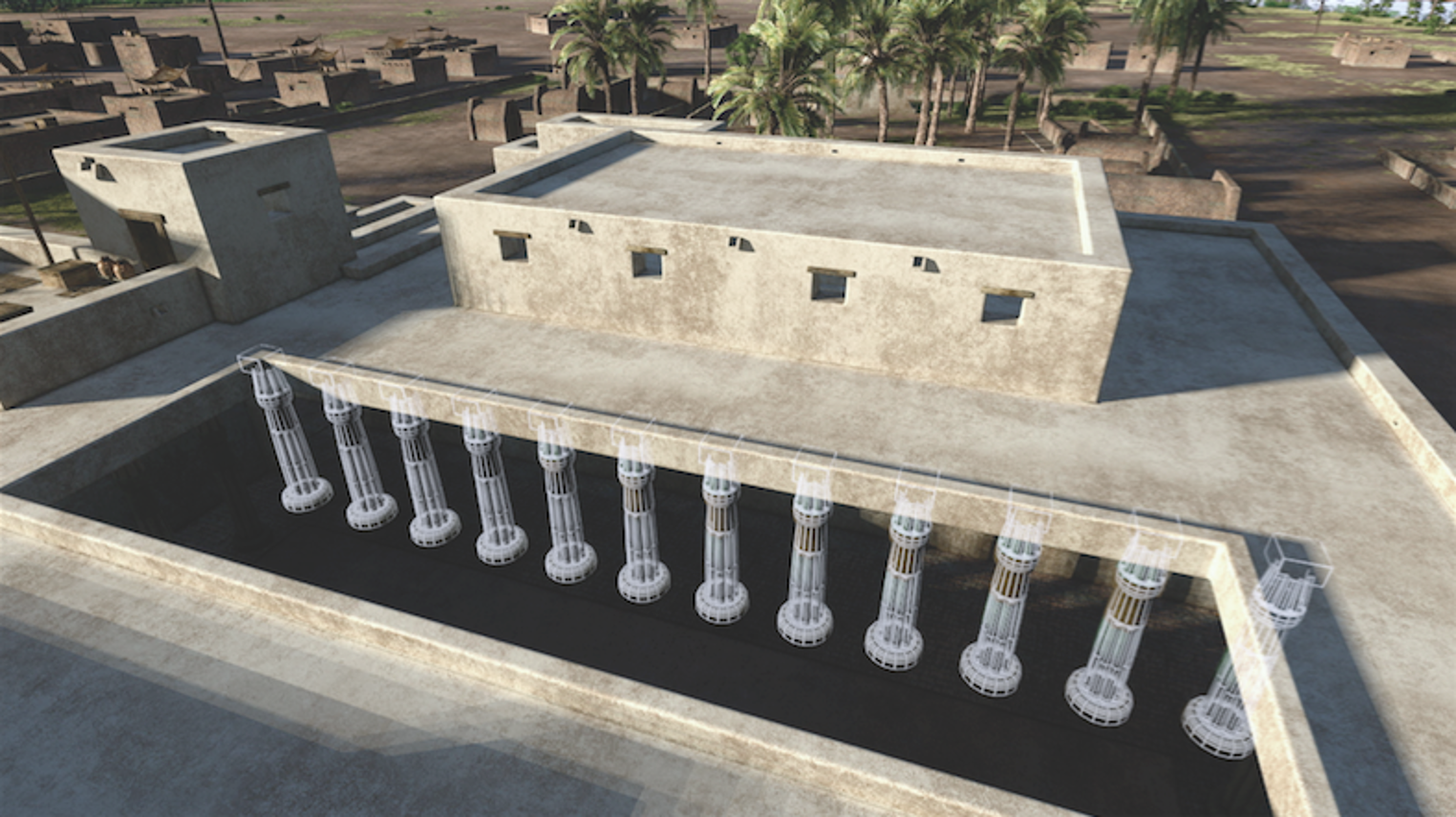
Image Caption: Schematic of 12-column entrance to house in Avaris.Source: 12 Column Entrance (Patterns of Evidence: Exodus) in Joseph Tomb and Palace at Avaris (YouTube) [https://www.youtube.com/watch?v=3f2nqErmcJs]

Image Caption: Schematic of 12 tombs in courtyard at Avaris.Source: 12 Tomb Courtyard (Patterns of Evidence: Exodus) in Joseph Tomb and Palace at Avaris (YouTube) [https://www.youtube.com/watch?v=3f2nqErmcJs]
Literary Form
Two fibers weave the fabric of the Genesis tapestry: one of genealogy and one of episodic narrative. Together, these genealogies and episodic stories form a series of תוֹלְד֧וֹת (tôledôṯ) 'generational accounts', whose headings demarcate the main sections of Genesis (2:4; 5:1; 6:9; 10:1, 32; 11:10, 27; 25:12, 13, 19; 36:1, 9; 37:2).
The five generational accounts in Genesis 1–11 demarcate the six sections of the Primordial Saga about the origins of the world (describing the formation of nature and culture then the divine judgments on nature and culture).
Primordial Saga
(3 blessings)
(3 curses)
[HORIZONTAL GENEALOGY]
5:1-32
[VERTICAL GENEALOGY]
6:1-8
[EXPOSITION OF CONCENTRIC NARRATIVE]
Primordial Flood: Natural Cataclysm 6:9–9:23
[CONCENTRIC NARRATIVE]
[DENOUEMENT OF CONCENTRIC NARRATIVE]
Genealogy of Noah’s Sons 10:1-32
[HORIZONTAL & VERTICAL GENEALOGIES]
[CONCENTRIC NARRATIVE]
11:10-26
[VERTICAL GENEALOGY]
Primordial Lineage
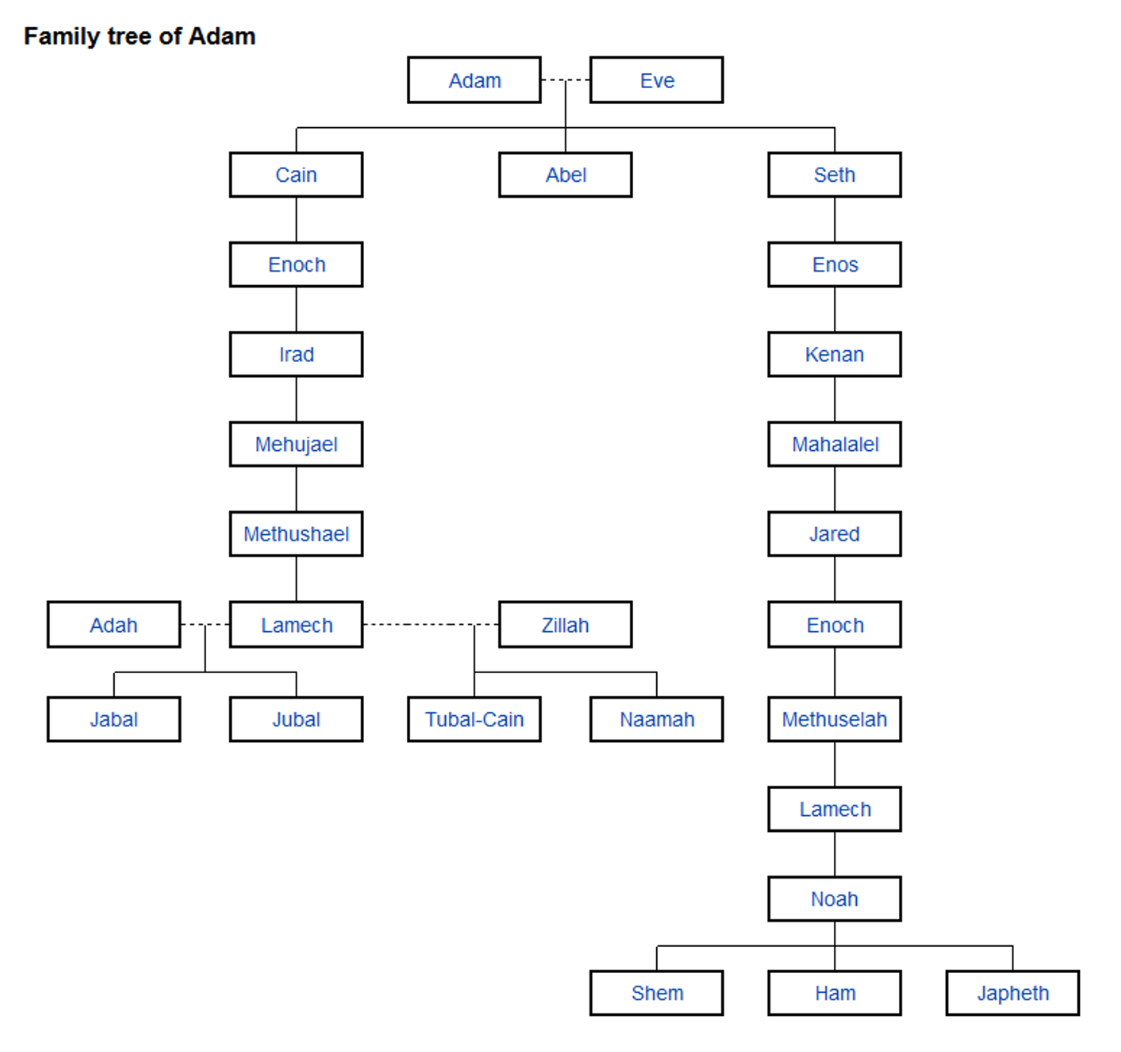
Image Caption: Source: Family Tree of Adam (Wikipedia) [https://en.wikipedia.org/wiki/Genealogies_in_the_Bible]
The six generational accounts in Genesis 12–50 demarcate the six sections of the Historical Saga about the fathers of national Israel (forecasting world blessing through their progeny and the land promised to Abraham, Isaac, and Jacob).
Historical Saga
11:27–25:11
[CONCENTRIC SAGA]
25:12-18
[HORIZONTAL GENEALOGY]
25:19–35:29
[CONCENTRIC SAGA]
36:1-8
[HORIZONTAL FAMILIAL GENEALOGY]
36:9-43
[HORIZONTAL NATIONAL GENEALOGIES]
37:(1)2–50:26
[PLOT-BASED SAGA]
Historical Lineage
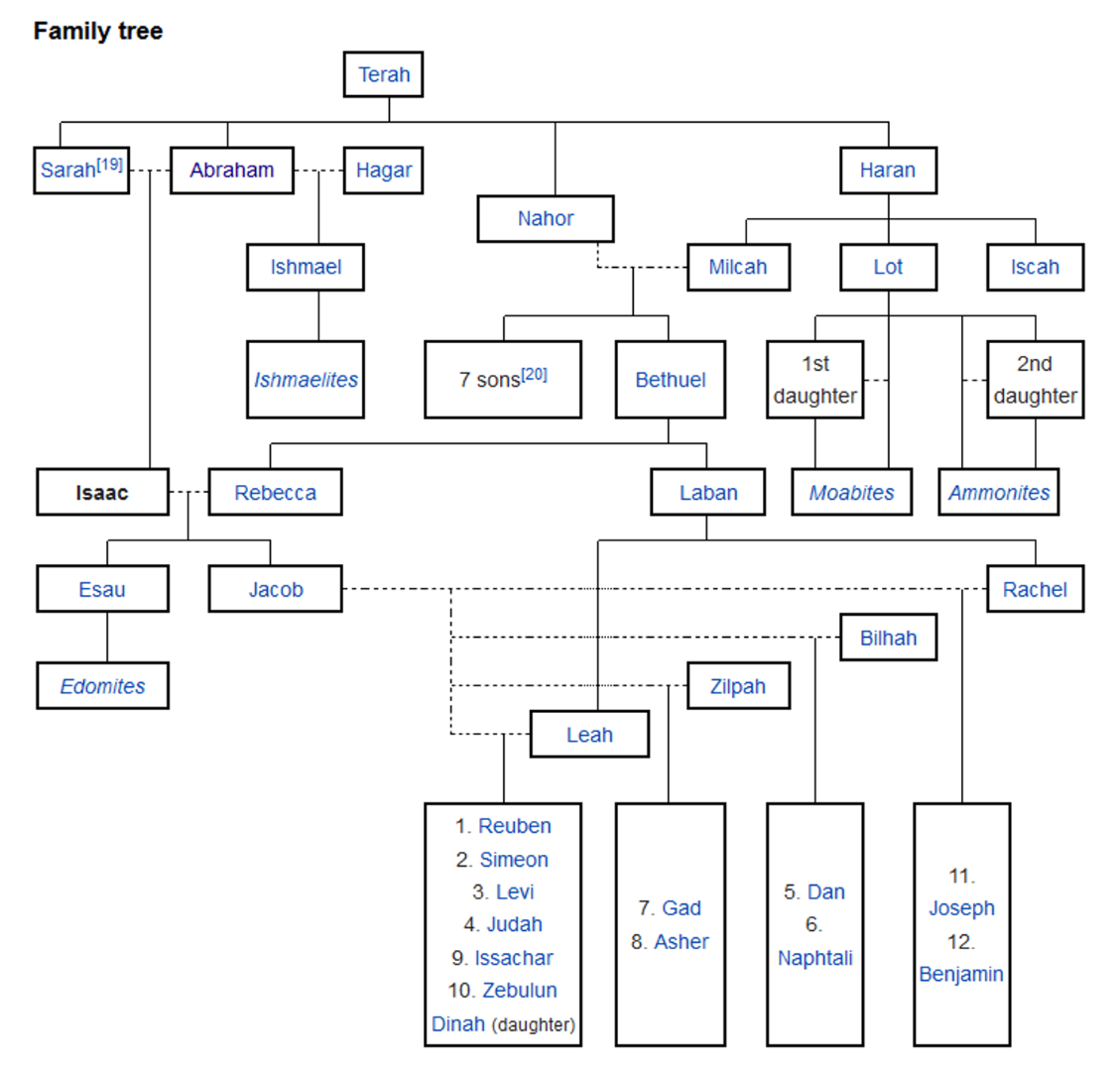
Image Caption: Source: Family Tree of Terah (Wikipedia) [https://en.wikipedia.org/wiki/Genealogies_in_the_Bible]
Genesis doesn't finish the story of Israel's role in bringing the blessing of salvation to the world, but it surely begins it. Horizontal genealogies summarize tribal groups whose role in salvation history does not further the narrative of salvation history. Vertical genealogies form a continuous line from Adam to Joseph — a line that will continue to be traced among most books of the Bible until the birth of Yeshua (Jesus), the Lamb of God (Genesis 22:6-8, 14-18; Isaiah 53:7; 1 Peter 1:19; John 1:29, 36; 1 John 2:2) and the founder of a new blood covenant with Israel and all nations (Genesis 3:15; Isaiah 49:1-7; 56:1-8; 59:21; Jeremiah 31:31-40; Luke 22:20; Hebrews 8; 9:11-15; 10:11-18).
Rhetorical Rationale
As a rhetorical work, Genesis is a genealogical episodic narrative of the emergence of a family that would become a nation, the nation Israel. God, the creator and judge of the whole earth, is the god who called Abram to the land of Caanan to form there a people who would become the conduit of divine blessing for the whole world. Israel's unique prophetic call to stand apart from other people's of the world and its perpetual right to the land promised by God are among the central themes of Genesis as a whole, offering a divine rationale for the statehood of Israel, its conquest of foreign nations in the promised land, and its defense against foreign nations who threaten its existence from without.
These divinely instituted themes justify Israel's national existence to this day. Long since Genesis was composed, Israel as a people has undergone threats from within and without that have attempted to undo God's plan of world redemption as revealed in Genesis. Whether they serve as types or antetypes, human characters and relationships in the book of Genesis are often archetypal and serve as paradigms of virtue or vice for succeeding generations. In distinction from other books of the Pentateuch, which nest legal prescriptions into narrative, Genesis is more descriptive narrative, accounting for the origin of creation, society, divine judgment, and the emergence of God's program of world redemption through the seed of Abraham in the promised land. While Genesis doesn't enjoin the call to follow YHWH's law found in other books of the Pentateuch, still Genesis counts as a worldview forming revelation, establishing principles, practices, and paradigms of virtue that call its readers to believe its claims about the divine origin of the world, of social norms and values (marriage and family), of ethnic distinctions, and of acceptable ways by which people can relate to the one eternal and holy god.
Sources
- Hurt, Carla. Ancient scrolls: where are the wooden handles? (Found in Antiquity, July 17, 2013) [https://foundinantiquity.com/2013/07/17/ancient-scrolls-where-are-the-wooden-handles/]
- Petrovich, Douglas. Hebrew as the Language behind the World’s First Alphabet? (ASOR: The Ancient Near East Today, vol. 5.4, April 2017) https://anetoday.org/hebrew-first-alphabet/]